Showing posts with label Gaming. Show all posts

Wednesday, 19 April 2017

How Town of Salem made a mechanic interesting

Town of Salem is a cool game. I just wanted to get it out of the way right now. It's free in browser, give it a shot, you'll have a good time. If you're at all interested in what I'm talking about here, I'm sure you'll have a good time.

Source
But it's also really interesting to look at what makes this seemingly simple game tick, and how something as simple as being immune to death at night adds layers upon layers of complexity. If you've ever played mafia, ToS is basically like that, but a bit more complex, taking advantage of it being digital, and having more roles.

Now, being night immune is a trait shared by several roles in the game, such as the serial killer and the godfather. If you haven't played or if your memory is fuzzy, it means you can't be killed at night through conventional means. That means no mafia killing you, no serial killer, and no vigilante. Let's take a closer look at what this means for the game as a whole:

It increases the value of certain roles

There are specific roles that can kill through night immunity. The Jailor, Veteran, Werewolf, and Arsonist all have the ability to ignore this attribute and just kill anyone they want at night. Obviously that's a powerful tool for whatever role has it, but it's not without downsides. The jailor is obscenely powerful, but to compensate they're always in the game and are the number one target for pretty much every killing role. The veteran can't actively kill, and can only react to other night immune roles coming to visit them. And of course the arsonist and werewolf are alone, and can't risk being found out or killed or else they lose.

When you give a role such a powerful tool, you're forced to give them downsides, and in doing so each role is just really interesting. You need to play more carefully as a jailor. It's common to try to bait people to visit you as veteran. This mechanic changes every role it applies to, and it makes the game much more interesting as a result.

It's a key strength AND weakness

Night immunity just sounds like a straight strength, no? It certainly is a necessary one for many of the independent roles. The neutral killing roles, for one, are a target of literally every other player in the game, and your "team" is made up of only yourself in this case. It'd be far too easy for you to automatically lose by a random killing if you didn't have night immunity in this case. The town can rely on their numbers, the mafia can afford a loss, vampires can make more of themselves, and so on. Every role has some sort of failsafe, and in the case of these solo roles their failsafe is just flat out being unable to be normally killed.

However, this isn't just a flat buff in these evil roles. Again, it makes the game more interesting, because the party that tried to attack you will know you're night immune. And that's pretty much always a bad thing. If you're neutral killing, mafia and town both want your blood and will out you the next day or in a death note. If you're the godfather, everyone but mafia wants you gone. In these cases, it means you've been put at a disadvantage but still have several options to get out of this mess, rather than just an instant failsafe.

And it's not as simple as "lynch the immune" for the town roles, either. The survivor and bodyguard both have the ability to assume temporary night immunity, so they can't just go about lynching everyone like this.

This is really, really good multiplayer design. I often see a lot of games stumble in providing interesting options on all sides. Take a sniper rifle in any FPS. Typically your options boil down to "get out of sight or die" and the sniper's options are "keep at range or die". It's just not as interesting when each weapon or mechanic gives a very binary state: play this way or fail. Town of Salem keeps it open, even when something bad or good happens to you. Getting found out as night immune isn't an immediate failure, and finding a night immune isn't an instant success. As a result of this it's also not a straight, boring buff to a class to help it work. It's a dynamic mechanic that helps them do their jobs.

It also works as an unknown

Night immunity is always going to be present in a typical game of ranked. The godfather and a neutral killing role will always be in there, so the killing roles will always have this mechanic to work with. That uncertainty means that night immunity is something every role will want to know about for different reasons.

The mafia will usually want to know who's immune so as to not waste nights to kill, and seeing as they're the only factions guaranteed to have someone able to confirm of someone is immune, it's often in their best interests to reveal who's immune through indirect means. It's a question of risk vs reward, typically. Is it in the mafia's best interest to leave roles that can usually kill them alive to see if they'll get the town first. That question doesn't have a clear answer and must be answered per game, and that's great.

On the other hand, every role with permanent night immunity is an enemy of the town, and a massive red flag that this is likely a bad person. It becomes a goal of leveraging every piece of info you get and then putting it into action, as town usually takes control of the lynchings. If it's not coming from the mouth of an investigative role or vigilante, however, it's typically suspect. This turns the simple act of trying to find the evils into a mad scramble to see who can be trusted and what info is good and it's just great.

The point I'm getting at here is that Town of Salem weaves this one gameplay mechanic through the entire game very well. So many multiplayer games keep mechanics isolated and single use. You can only use the grappling hook for mobility. This shotgun only has one use: close range combat. The mechanic of night immunity is not a one and done mechanic only applying to certain scenarios. It's used across the entire game and has repercussions far more than it appears at first. Not every game needs to do something like this, but it's certainly a valuable tool to keep in mind.

Saturday, 8 April 2017

How Far Cry 2 Made War Boring

Hey, I don't hate Far Cry! Just bad stories ;)

In my last article, I expressed disappointment with Far Cry 3's inability to make the story and gameplay work together, and it ended up being a fun game with a story that just doesn't work with the gameplay. This is very often the norm in video games, however. You'll get a dramatic cutscene about how this is a life and death scenario, and then you'll take 30 bullets to the face and not die. However, the reason I took such issue with Far Cry 3 in particular was that this series had already gotten it right.

But before that, just a quick disclaimer: please play Far Cry 2 first. If I tell you what it's all about the effect will be ruined. Just go in blind and you'll get it. Maybe.

Source
Far Cry 2 is an anti-war game to it's very core. Everything from the story to the gameplay is perfectly in tune with what it wants to do, in stark contrast to Far Cry 3. This is pretty much the best execution of an anti-war message I have ever seen. It doesn't make any grandiose statements. It just is, and it's a hell of a thing.

Far Cry 2 is all about war. From the moment you start the game you hear about war. You're shot at 5 minutes in. You can't go more than a few meters between soldiers. The region's very identity has been erased and replaced by war. It's all you do in gameplay, it's what all the missions are about, you cannot escape war.

Already we can see that it's doing much better than Far Cry 3. That game is unable to reconcile the difference between the player and story, constantly talking up how violence consumes while giving the player total control over everything. Fary Cry 2 keeps it constant. The game is about war, and thus the story follows. It's certainly an easier line to toe than 3, but it achieves what it sets out to do.

That's about where I stopped with 3, since if a game fails there it can't really go much farther. However, 2 does indeed go one step further. It's one thing to have the gameplay and story work together. Plenty of games do this. It's another thing entirely to make the game convey a message through all this.

Because Far Cry 2 can get pretty dang boring. Enemies never run out and you need to clear camps every. Single. Time. You move through them. Missions never change much either. You'll run a gun related mission to unlock more stuff in the shops. You'll constantly get in and out of cars looking for meager handfuls of diamonds.

And it's not like the region will ever change, either. It's not like you're able to change anything. At the end of the day, everyone will shoot at you, no matter what. You can get to a new area, but that doesn't change anything, just expands it. You can run mission after mission, and nothing, nothing, will change.

I hope you're seeing my point. This is all very intentional. That's very often a defense thrown out for bad game design (I am looking SQUARELY at you MGS4), but Far Cry 2 gets it right, oh so right. The reason this simply isn't sloppy game design is that it follows the story and tone very tightly, to such an extent that this simply had to have been intentional. The entire plot is tedious and barely changing. The soldiers are hard to tell apart. And it's not like anyone goes about being happy or optimistic. This tone was taken very seriously, and reflected right in the gameplay.

It's not always going to be a fun game! It's really not! You'll grind through camps forever. Maybe you'll get a terrible sniper rifle or an awkward mortar. Maybe you'll get a slightly different pistol. It's all the same in the end, though.

Far Cry 2 makes war just so fucking boring. And I think that is the most powerful thing about this game. You can fixate on the gunplay, the fire physics, or the story, but at the end of the day, this is a game hellbent on showing you the crushing awfulness of war through a feeling common to many games: boredom.

You hear a lot about boredom in war stories. Look at any interview with a soldier and they're likely to talk about the crushing boredom inherent to war. It's not like games portray. It's not adrenaline pumping action, it's a whole lotta waiting. Far Cry 2 knows this.

But what if you push through all that? Surely, if you push through and kill the Jackal, the supposed source of this conflict, it'll all be over, right? Only it turns out the Jackal is on your side, you've been flaring tensions up for nothing, and in the end to actually help people the Jackal is going to have to die. Oh, and even if you somehow make it out alive you have malaria and are going to die anyway. Fuck you.

War consumes everything in Far Cry 2. It consumes the characters, the region, the game characters, and perhaps even your fun in the end. It's got a clear message and intent, and every element of the game works with it. Far Cry 2 is a sterling example of how to weave the gameplay and story, and I do hope more people take a close look at it.

Sunday, 2 April 2017

How Far Cry 3 Failed at Story

Far Cry 3 is a video game. That's the start, end, and sum of all of its issues.

Source
This is a very odd game, looking back. It's been almost 5 years since it released and it continues to be a very present game. People look back on it fondly in a lot of ways, and in many areas I do have to agree with them. The actual gameplay is very good, particularly once the wingsuit is relinquished to the player. It gives a lot of choice to the player in the gameplay, and is a nice mix between keeping things at a good pace while also giving the player a lot of freedom.

I'm not here to talk about the gameplay, however. It works, it is good, etc. etc. That's beside the point. The far more interesting bit, and where I think it fails, is in the, well everything else. This is a game that quite honestly falls flat when it comes to everything but the gameplay. It tries to have a complex story deconstructing the gameplay and murder key to the game. In doing so, however, it fails to use this in anything but the script, and as a result comes out limp and toothless.

Except for Vaas actually he's a very good villain who really does do an effective job of communicating conflicting themes and overall pulls things together very nicely with some great voicework and brilliant monologues seriously he's like a character dropped in from a different much better writer

cough

See, here's the thing about Far Cry 3: it's ostensibly about deconstructing the violence in the game and how it erodes the main character's morality and sanity. Not exactly a bad idea for a game. You have to remember, back in 2012 things were pretty different. The violent AAA game was still being played pretty straight and the landscape for success was a lot more limited in publisher's eyes. We've gotten quite a few games going after that nowadays, but back then this was still a fairly new concept when applied to a big game.

The story is... well it's OK. I don't think the writers did a phenomenal job of it, but the core of the script is fine and for the most part I think they had a pretty solid thing going. It does tend to stumble sometimes, but I think for the most part they had a very basic idea going that could have been fleshed out very well. And like I said, whoever wrote Vaas definitely deserved a pay raise. Of course, it also stumbles sometimes, mainly whoever decided Vass should have been replaced with Hoyt should have been fired. But by and large, when I talk about Far Cry 3's story being bad, I am not talking about the writing.

People absolutely love throwing around the term ludonarrative, I've done it before even. I do really like this term, however, because it gives a vocalization to the idea of story and gameplay working together. It's really cool to see a game doing this right! It's also really interesting when it, erm, all falls apart.

It is quite obvious in retrospect that the game designers and story writers were not working so closely. Separately, they're fine as ideas and even mostly in execution in game. Neither works so well when combined, however. Far Cry 3, in what I think was likely some accident of miscommunication, tries to have its cake and eat it too. This is kinda tricky to explain, but let's take a look at 3 different parts of the game and I hope this'll become clearer.

Going forward I'm going to assume you've played the game or at least know the story, as it'd take too much time to explain otherwise.

In the Beginning
Far Cry 3 has a pretty effective story opening, I think, and hell, I think the gameplay for the most part helps out here. It's a tad out of your control, but that generally works to its advantage and you are for the most part in the same shoes as Jason. Out of control, confused, and maybe a wee bit scared. It works, it's not genius, but it's a pretty effective opening and makes the tone of this game known to you from square one.

And then you get in control of Jason, and the illusion just all falls apart.

See, here's the thing. Jason will act and talk like a scared kid in the opening portions of the game, which makes sense. However, it doesn't gel with the gameplay at all. You handle a machete in the same way at the start and end. Your gun accuracy? Always perfect. You'll run through combat just as flawlessly the first time as you do at the end.

The issue here is that this is not at all what's happening in the story. Ostensibly, Jason is terrified, has no idea what the hell he's doing, and barely even knows how to shoot a gun in a firefight. And then you get plunked into a firefight and none of that holds true. The story, in this part of the game at least, is so totally and completely undercut every single time you're in control. I understand that sometimes liberties must be taken, but when the basic acts of moving and shooting are contradicting your story, you may want a second pass at it.

The transition
It's certainly a good idea for a character arc to have Jason slowly enjoy and relish in the violence. It had never seriously been explored in a high profile game before and seeing as games tend to revolve around violence, it's a great fit too.

It was not to last in quality beyond and idea, however. The opening is a little worrying, and those worries just sort of continue and develop throughout the game. The entire game is just... so... static. Nothing ever changes. There is no progression in the gameplay besides the skills you unlock.

While I can perhaps see the intent to have your skills reflect your state of mind as a killing machine, it just doesn't work. How exactly does learning how to cook grenades or getting more health help show the player how Jason is? For that matter, why would an upgrade system work at all in this game?

I'm serious. This game should not have had a skill upgrade system if it was seriously committed to making the gameplay and story work together. The entire purpose of the game's story is that violence without thinking can be easily stumbled into, and any old person could slip into that darkness. That entire point does not gel with letting the player make specific choices on how to progress your killing excellence.

Maybe the idea was that you're somehow complicit in progressing this? It's done really, really badly if that was the intent. The game presents a story of out of control instincts and then hands you a handy menu in which to progress. It just makes no sense. Imagine, if you will, a game where your upgrades are gained by doing specific things. Maybe you learn a new, vicious way to kill from a mission. Maybe after you've killed enough with a grenade you unlock new ways to use it.A menu is just so... direct and against the entire flow. Jason progresses as a character in one part of the game. He progresses as an unlock tree in the next. Does it really have to be this way?

All for what?

Let's be real here; Far Cry 3 fumbles the ending, as it does with everything else. There are 2 endings that you can get by making the choice at the end of the game to kill your friends or not. If you kill them, you get a very, um, let's be delicate and say badly written ending. That's not the point here, seeing as we're looking at the gameplay vs. Story. The point is the other ending, where you just leave the island.

Why does this ending even exist? To fulfill some idea that video games need choice? This screams executive interference, and it just goes against literally everything the story has been building up to this point. Everything is building up to Jason killing his friends. It's obvious. The entire point of the game has been how violence corrupts and takes over one's morality. To give the player the option to say, "no", and go against every single point in the story is just... wrong. End of story. The player should not have had a choice here.

And that's pretty much Far Cry 3's story in a nutshell. OK, but brought low by it's inability to reconcile the gameplay and story. It's clear to me that everyone involved were concerned with making a fun game first, and a story second. While that may be all that is needed, it's disappointing that this is a sequel to a game that got this dynamic so, so right. 

But more on that next time. Thanks for reading!

Friday, 24 March 2017

What makes a choice matter?

You encounter an article on the internet! What do you do?

A. Read it (Friendly)
B. Skim it (Dismissive)
C. Critique it (Helpful)
D. Ignore it (Rude)
Image result for video game choice
Will you be a cool guy, or evil prick?
Source
Look, I get it. Making choices in video games is fun! I like it! But we need to talk about the mass mishandling I see of making one's choices "matter". You want games to be taken seriously as a storytelling medium? Please, please start noticing this stuff. I do not want to name any names today but rather take a general look at this type of storytelling. Let's hop right in.

So generally there are 2 styles to this sort of interactive narrative. The more straightforward option is to actually make one's choices matter, have the story actually shift around them. This is not a very popular option in games, however, for a pretty good reason. Games are pretty expensive. It costs a lotta money to make new cutscenes and get new voicelines and make it all work in the game systems. You can't just write some more words like in a choose your own adventure book.

So generally the default is the 2nd general option, what I like to call "fake choice". It's basically making your choices "matter", but they really don't influence the plot all that much. You could choose the rude option, the happy option, or the sad option, but you'll still get the same information and same objective in the end. Despite how bad "fake choice" can sound, it's not a bad option at all. It can lead to a much more focused story if you really only have 1 plot in the end, and makes sure no part of the game will suffer from bad writing because it just happens to not work as well.

Now, when you're talking about the overall narrative, this is all well and good. However, where it's easy to stumble up on this 2nd type of story is in the moment to moment choices you make, in that it is far, farrrr too easy to just make them, well, pointless. I think this'd be better put in a hypothetical:
You: Hey, I just retrieved the (insert item here).Character A: Awesome! This'll be great in helping us defeat (insert enemy here)!

Dialogue options:
A – Show enthusiasm for plan
B – Show apprehension for plan
OK, let's just take a timeout here. This is a pretty typical sort of setup, where you can either agree or somewhat disagree with someone on the same side of you. Play any game that lets you make choices and you'll hit a similar scenario sooner or later. It's basic but still a very good setup.
Generally things like option A clear the way for a faster plot and more action. It's a safe choice that can also easily be leveraged to let the player see the non confrontational side of everyone. Option B scenarios on the other hand let you get somewhat deeper and lets you see the more confrontational side of people.

So even though both options will lead to the same sort of outcome, it's all in how you get there. Make each route interesting, make each route different enough, and most importantly make them mean something. If your understanding of a character is different in each route, that's a great outcome, essentially.

Now, let's see how this can go horribly, horribly wrong.

Scenario A:
You: Hey, I'm game. When do we get started?
Character A: We'll get started on this tomorrow. For now, get some rest, you've certainly earned it. Catch you later!You: Alright. Later!
Scenario B:
You: Are we totally sure this is going to work? Seems a tad risky.
Character A: Look, I get you're worried, but there's not much of a risk to this anyway. Just get some rest, we're all gonna need some for tomorrow.You: OK. I'll see you tomorrow.

So obviously this is really rough and short but you should get the general idea. The difference in these 2 scenarios is that there really are no differences. There's no room for diversifying or rounding out the characters. They both funnel the conversation into the same lines really quickly and still keep the same sentiment in both.

Your choices do not matter here. You learn nothing different, you don't get any difference in outcome, the tone isn't different, it's just the same scene, but one has them agreeing and one is a disagreement. Neither option garners any new reactions or even makes you think differently about it.

If you're going to keep the overall plot the same, you need to put a lot more consideration into how each individual moment makes the player feel about that overall plot. Going back to the 2 options I mentioned earlier, imagine a plot about saving the world or something to that effect. Now think of the 2 general character threads. One story has the characters working together all the while and eventually fixing the issue. The other has them arguing a lot but ultimately setting aside their differences to fix the issue.

There's a lot you can do with this! If you're smart the two ostensibly same plotlines can be interpreted to be almost totally different stories. You can view all the characters differently. You could gain info that radically changes how you view the same events.

The point of this whole article is that if you want to write a story and base your choices around upholding the "illusion" of choice, you are doing it wrong. Again, not naming names, but I see most games doing this horribly, horribly wrong. "Your choices matter" is pushed up as a marketing point when in reality, no, your choices do not matter.

"Fake choice" should still be choice. It is just that it should be about the characters and your view, not the plot. When a game fails to understand that, when it well and truly does ignore your choices, that is when people get frustrated with your game, and that is when you have failed as a story writer. This isn't easy, and I'm not surprised that countless developers fail at it. If for some reason any developers are reading this, keep at it. There's only one way to learn this, and it sure isn't gonna be from some random person online talking in the most general terms.

Sunday, 12 March 2017

How to manage a community

So, typically I want to avoid this sort of stuff. Generally blog posts that are rants/examinations don't fit an all purpose area like this, and I have no intention as to delve into either of those fully. Today, we're going to be taking a good, hard look at how Blizzard fucked up in their latest Overwatch patch, and examining what this can tell us about how to handle a multiplayer game in general. If you don't play Overwatch, I'm gonna try to keep it understandable, but no promises.

Image result for blizzard entertainment
Source
So patch 1.8 came out a while ago, and take one look at the forums at the time... oof. People were not happy with this update, and I'm honestly fully in their court here. I'm not here to rant or get mad, though. Let's take a calm look at the individual aspects of what mess the two weeks leading up to the update were. Obviously the response from Blizzard to fix this stuff has been swift and responsible, but I still feel it's a good idea to examine what not to do.

So let's start with the elephant in the room, or in this case, omnic: Bastion. The general community consensus was definitely that he was at least a tad overpowered before a hotfix brought him down a notch. While this might seem to be just a simple bad balancing issue, I don't think that's what you should be taking from this alone. Bad balancing happens all the time in every game, and the real issue lies elsewhere, I feel.

This is a prime example of a negative player behavior loop, one that is plain to see because the test server completely failed to catch this. The root cause is a lot more general and I will get to that, but right now let's look at why offering a direct incentive is a lot more important.

So when it comes to what is beta testing, in essence, there needs to be a big incentive for players to get in on it. Remember that it can be a big ask to get players to even load up the PTR in the first place. An entire 2nd copy of the game needs downloading, plus any and all time you spend on it won't affect your progress in the actual game. Not to mention that it can be buggy, and a low player count means worse matches, and so on. It's a big barrier to entry for many, and what rewards do they get? The satisfaction of helping the game maybe?

What we're looking at here is what would be instantly identified as a poor rewards system inside any actual game. When all you have to offer is the vague satisfaction of maybe helping, that's going to be a nonexistent incentive for anyone not caring about high level play, for one. It's easy to forget that people will still follow said systems outside of the direct game, but this is a great example of this in action.

So, what about Bastion himself? The main issue that sprung from him was ultimately swinging the balance hammer too hard, too silently. Balance is already a tricky thing to do, but what I think a lot of people forget is that the developers have to take into account the community reaction when implementing or even suggesting changes.

Now, the community is often wrong when it comes to what they think is right for balance. Rightfully so, as we're not game designers, nor do we get paid to do this. However, that fact is a tricky one indeed to balance with what's right for the game. What's right is not always what will be percieved as right, and outrage among the playerbase can run rampant, making forums a mess and from an outsiders perspective making your game and playerbase look a lot worse.

Now in this case specifically, the community turned out to be very correct in their assumptions, and Bastion did swiftly receive nerfs a mere days after his buffs went live. So why the outrage? Point number 2: communication.

See, generally Blizzard are pretty good with communication, providing regular updates and posts for the community. However, developer updates and the like can be a bit sporatic, which makes sense. However, get a change the community doesn't like and have it line up with an unfortunate 2 week radio silence on it, and, well...

It was like a weird microcosm of a really resentful community for 2 weeks, let me tell you. Players got frustrated at the changes, frustrated at the lack of communication, and frustrated at how vague everything felt. It went from a pleasant relationship to a one sided shouting match.

That is lesson number two from this whole mess. Communication, however small, matters. You cannot rely on your community to moderate their feelings nor can you assume the best. If you set a standard of communication, stick to it. Doubly so when you're introducing huge change. Those are the times when the community is at the most volatile, when it's at its worst and most emotional. That's when the real legwork by community managers needs to be put in, and that's when you can make your game and community truly great.

And to cap this all off, the community outrage seemed to disappear in one simple dev post. That's all it took. Players are not anger machines. It is possible to control them and their emotions, odd as that sounds. With the right updates and openness, anything is really possible when you're making a multiplayer game in the community.

Short and shallow post this time, been busy, sorry bout' that! Hope you enjoyed anyway.

Friday, 25 November 2016

A Deep Dive into Sombra's Hacking

Sombra has finally, FINALLY hacked her way into Overwatch, and seems set to do some interesting stuff with the meta. However, today I want to cast that all aside and take a close look at one single aspect of her moveset: her hacking.

Image result for Sombra
Source

First, a brief rundown. Sombra’s hacking ability has a 12 second cooldown and may be used on an enemy hero, turret, or healthpack. If applied to a hero, they are unable to use abilities for 6 seconds. If applied to a healthpack, it becomes unusable by the enemy team and recharges faster for one minute. Turrets hacked are useless for 6 seconds. Hacking takes about 1 second and taking any damage stops the hack from going through.

First of all, we must ask what this ability’s intended use is, fairly obvious here. It’s mainly meant to deny area control and mark a target to take out. It is able to deny enemies health regen otherwise available to them, and makes areas covered by turrets safe. If you decide to hack an enemy, however, it takes on a dramatically different use. This ability is one requiring teamwork to effectively utilize. Since Sombra cannot hack while under fire, she relies on the enemy being distracted while she gets her hack off, essentially meaning teammates need to draw fire. Teammates are often needed after the hack goes through as well, since Sombra’s primary fire often will not be enough to kill the enemy by herself. While it is rather situational as a result of these caveats, it’s an incredibly powerful ability if used at the right time, enabling guaranteed picks on a weakened target, or an opening to attack by disabling a dangerous enemy.

And really, the fact that she needs a team to get stuff done with her hack is emblematic of her whole kit. Sombra is, more than anything else, an enabler for her team with this hack. Use it on a D.Va and she’s a sitting duck with no defense. Hack a Reaper or Mei and your team no longer needs worry about their invincibility-granting moves. Sombra’s hack fits the role of making your movements as a team safer rather than faster. She lets you go all in on that Roadhog, knowing he can’t slip away and heal.

On the flipside, she can also blunt the force of an enemy assault, once again ensuring safety for your team. Take Roadhog once again. Many a defense have fallen because Roadhog hooked the healer for a guaranteed kill. Sombra can, if not stop the assault, delay it with a well placed hack, forcing the team to wait as their setup has been taken away from them for a short while. On defense, Sombra fills the role of disruptor, throwing wrenches into the enemy team’s plan and letting her allies bear the brunt of an assault more effectively. Once again, she’s making a team’s defense more secure and safer.

So that’s what her hack is trying to get people to play like. But what about the mechanics of the hack itself, the numbers and effects?

The cooldown is the most interesting number on the move to me. 12 seconds is quite a long cooldown, and in fact the only moves with higher cooldowns are Soldier: 76’s biotic field, Hanzo’s sonic arrow, and Winston’s barrier. This is mainly due to the dual use of it, forcing players to choose between uses of her hack in between engagements. Since Overwatch moves at a pretty rapid pace, most fights take at most 20ish seconds to fully resolve. This means that often if you hack an enemy in the middle of a fight you will lose the ability to hack a healthpack in the aftermath, and if you hack a healthpack you may be without a valuable disrupting tool for much of the next fight.

The cooldown is in place to ensure Sombra can’t quite literally “hack the planet”. She has to decide between area control and teamfight effectiveness at any given time. Area control lasts longer, but it may not matter if one team pushes up past the area you’ve locked down.  Teamfight potential can swing a game, but if you don’t punch through the enemy lines you’re giving up a solid defense to fall back on. On a very broad level, you can think of it as risk (Offensive enemy hack) vs. safety (Defensive healthpack hack).

Ok, let’s switch over to the numbers on the enemy, mainly how long the hack lasts for. Those 6 seconds are quite deliberately chosen, as most abilities in the game have  an 8 or more second cooldown. Pluck a random ability out of the air, and there’s a good chance it falls in that 8 seconds or higher range. What this means is that it’s totally possible to, in essence, whiff your hack even if you get it off.

Imagine a scenario where Zarya has just shielded herself and an ally, and right after you hack her. Well, that hack isn’t going to do much, as she wouldn’t have been able to use her abilities on cooldown anyway. The cooldown ensures you can’t use it mindlessly, and forces to to stay cognizant of the fight at hand.

One final element adding to the cooldown is the ability to see if an enemy has their ultimate up when you hack them. You’re able to use this ability for recon as well, although it’s generally viewed as a suboptimal use of the hack purely to gain this info. Still, in the scenarios where it is useful in this way, you have a 3rd use if need be.

Last, but certainly not least, is the amount of time needed to execute a hack. It’s about 1.2 seconds, and if Sombra takes any fire at all the hack is cancelled automatically. Nothing too complex here, this is to force Sombra to use it when flanking or working together with an ally to take fire. She can’t get into the fray at full effectiveness.

So, overall, the elements of the hack are:

- Area control by hacking healthpacks
- Safe picks with an offensive hack
- Ability to shut Torbjorn’s turrets down
- Delaying enemy pushes with defensive hacks
- An inability to use it when under fire

When you put it all together, you end up with an ability that’s focused around Sombra’s team rather than Sombra. She can’t hack a turret or enemy in a 1v1, as taking fire renders the hack unable to execute. The health pack hack lasts for a minute, leaving it open for her whole team to use it. She personally doesn’t benefit from defensive hacks as she’s meant to be hard to pin down, but her teammates more in the enemy’s face do benefit.

So, overall if I had to describe this ability in a single sentence…

An area control and team enabling ability used to deny health and ability use to the enemy, making your team safer, yet cannot be used if Sombra is in immediate danger.

Whew, this article took way longer than it really should have. Did you like looking into each individual aspect of a small game element? This is something new I really enjoy and want to try more, so feedback and feelings on this would be greatly appreciated! Thanks for reading and have a great day.

Saturday, 15 October 2016

A Personal Retrospective on Apollo Justice

Spoilers. Obviously.

Image result for Apollo Justice logo
Source
In light of the recent news that Apollo Justice is finally getting a mobile release, now seems a good time to talk about this one game, and hoo boy. This one's a beast to tackle. If you know anything about this game, you know how divisive and controversial this game is. On one hand, you've got the corner of fans who hate this game with a passion, and everything it represents. In the other corner are the fans who like it quite fine, and think the outrage over it is totally unjustified.

If you wish to know where I'm coming from when writing this, I'm moreso in the first camp. Apollo Justice is my least favourite Ace Attorney game, though not because of any drastic shifts in the world. My issues come from the story and actual logic it uses and how confusing it gets. So, sit back and let's figure out where this game went wrong, and more importantly, why.

So how did this all start? After the 3rd game wrapped the story of the series up quite nicely, Capcom was at a bit of a crossroads. Ace Attorney was undoubtedly a money making series that they would do well to continue, but how does one continue after a clean end? Well, usually a reboot is what a lot of writers go for, but in this case, they decided to bring in a totally new character and story, keeping the game mechanics. However, it was eventually decided that they should keep some continuity, so they brought in some old characters as well to appease old fans.

Yeah, that didn't go over well at all. Most notably, Phoenix Wright was brought back, and let's just say a lot of people weren't' very happy with how they did this. It's interesting to look at, because it's a prime example of how not to implement changes in a character. 

The important thing to remember here is that at first, most changes are neutral in concept. I believe that the idea of making Phoenix lose his lawyer's badge wasn't what got most people upset. I personally think it's not a bad idea, and it's even a fantastic story hook to start off with. The problem is that this idea was clearly thought of in a vacuum, and they didn't properly take steps to make this make sense in the game.

This is made abundantly clear in 2 areas, both relating to the smoking gun of this idea: forged evidence. First of all, the manner in which Phoenix loses his badge is contrived as hell and totally clashes with the story and characters set at the end of the 3rd game. At the end of T&T, it was clearly established that going forward, Phoenix had truly outgrown his weak, unconfident roots, and had truly risen to the level of a great lawyer. Nice ending, all wrapped up with a bow. But they ignored this, having him make the truly dumb choice of trusting evidence he had no time to vet. They also make him go against clearly established core values in previous games, him hating the idea of crooked tactics in court.

I rag on these tired points because it would not have been hard to fix these issues. Why not put Phoenix into a scenario where he has no choice but to present the suspect evidence? Say he had a personal connection to the defendant or something along those lines. It would have given a reason for him to act so recklessly. And on the other point, why not use the MASON system's capabilities to show past events to show hints of Phoenix becoming more jaded and disillusioned?

It's very clear that the writers were trying to recapture the essence of the first Ace Attorney game. Rookie lawyer, new world to establish, new gameplay mechanics. But in doing so, they fell into the trap of mostly looking to the first game for inspiration, and that led to Phoenix acting how he did in the first game. When you're not looking to how characters were at the end, you're not going to see any need to explain changes. So of course it seems obvious Phoenix would make a dumb move in that mindset. 

Alright, alright, I slag the game off a lot, but credit where it's due, besides how Phoenix acts, the game pretty much nails the first 2 cases. While a lot of people do just write the entire game off, it's important to recognize that the old AA magic is still very much present in a lot of the game. The setting may not be your cup of tea, but the first case has an excellent and engaging opening unlike any of the other games, and the 2nd case is more of the same old AA excellence in a lot of areas.

Alright, I'm not here to give every detail on this game, as much as I would enjoy that. Just remember that I'm not saying as much about the good aspects of the game because of this fact. What I'm about to say is an analysis of what went wrong in the 2nd half of the game, not what I personally think about it. Just remember that most of the stuff I don't mention I like quite a bit (Especially the music oh my god). 


So, case 3. This is widely considered a bad case by many, and it's an excellent example and word of warning to all story writers wanting to follow in the footsteps of crime stories. It's clear to me here that the separate elements of this case were almost certainly thought of separately, with no cross checking between them to see if they would work well together. It's easy to imagine such a scenario, too.

They come up with the basic idea of the scene being a concert, and they've already got a performer in the cast, so it already fits. They then think of the elements of this case, a defendant who can't speak English, a gun as the weapon, a “locked room” scenario, and the defendant can even be a kid. Maybe we can incorporate international smuggling, and undercover agents too!

Now, all this stuff sounds fine, but the details muddy it up, details that were clearly not , let's say, cross-examined. How is a kid supposed to fire a powerful gun? What motive would a kid have? How would an international smuggling operation fit into the overall story? How do we get the kid to show any personality, since all we really have is text?

All these elements, when you lay them out, look ridiculous if you try to combine them (Seriously, just throwing in international smuggling isn't a good idea). We can see how ridiculous this seems now, so why not back at the conceptual level? I can't say definitively, but the most likely scenario in my eyes is that they created the story in a modular fashion. By the time the separate parts started to grind up against each other badly, it was likely too late to change the fundamental parts of the case. It's a lesson in being sure to check and double check all the important beats in your ideas before expanding on them.

And, finally we arrive at case 4. No, that's not what I'm really wanting to talk about here. Case 4 is fine. Let's discuss MASON.

MASON is the most ambitious thing Ace Attorney has ever really tried. I'll be blunt; it didn't work. I'm not talking about the story, I'm talking about how it was conveyed. MASON, for those of you who don't remember well, is supposed to be a database of sorts where the jury is supposed to trawl through it and come to their own conclusion on the proceedings.

Sigh

I could literally write a whole article about this system, and why in the game universe it makes no goddamn sense. From conflicts of interest to half the stuff in it being seemingly irrelevant to the case, there is no way this would be greenlit. But let's assume for a second that it could get by (With the crazy legal systems in place it wouldn't be too surprising), and examine why it fails the player specifically.

For all the heat I give it, MASON could have worked in theory. A system where we jump between recorded events to try to piece together a story? Sign me up! But the issues are too glaring here to ignore.

It's linear to a disappointing degree. Yes, Ace Attorney isn't known for story paths or anything, but it doesn't let you discover clues and evidence on your own. Rather than using your own logic to figure out what you need look for next, it is in every way like a tightly written investigation sequence, just hopping between time periods. Yes, it still works, but why would we even need to go about figuring out this in such a convoluted manner? In such a story driven game, every piece needs to have a purpose, otherwise it's just fluff and not valuable to the story.

Of course, everyone's biggest complaint with MASON is how it seemingly allows you to transport evidence from the future into the past. Again, if you don't remember, often you would gain evidence from some recorded event in the future, but then go back to a recorded event in the past and still being able to use it. This is handwaved as not being a 100% accurate representation, but that's just not good enough. In a game built around logic and reasoning, such blatant lazy storytelling should not be allowed. It makes no sense, and even if there is a good reason it's confusing to the player, the death knell for any story.

MASON is the sign of the biggest problem with Apollo Justice: things just weren't fitting together well. You can see all the signs of good ideas underlying the problems at every step. Apollo is an interesting idea for a character. The music is SO GOOD (It's my favourite OST in the series guys it's that good).


The problem they hit looks very much to be scheduled related. Many of the ideas and characters were never given enough time to be expanded upon, and a lot of the plot beats simply needed more thought put into them. Apollo Justice is the victim of running out of time.

But it's not all bad, and I want to end this little look back on a positive note, because Apollo Justice is not a train wreck. Not by a long shot. Apollo Justice has excellent side characters, on par with the other games easily. I know everyone hates some of them, but they stick out and are very clear, and you're not supposed to be comfortable with Spark Brushel anyway guys. Seriously.

The game also has engaging cases, something I think a lot of people ignore. Yeah, looking back there are plot holes, but in the moment they've got a great pace to them, and ensure you're always engaged. The game has very clear signposting and good indicators for what you need to do next, something the older games did often fail at.

Regardless of what it does right and wrong, this game is likely going to remain contentious for a very long time to come. And that's fine by me. Every game series is gonna have one of these, right? I still recommend this game to any Ace Attorney fan despite all this, and I encourage you to try the upcoming mobile port if you haven't gotten a chance to play it yet.

And the music guys oh my god can we just talk about this again it's so amazing holy cow


Tuesday, 4 October 2016

Atlas Reactor: Sheer Brilliance

If there's one game you need to be looking at right now, it's Atlas Reactor.

Image result for Atlas Reactor
Source

Have you ever played any turn based strategy game and wondered “What if it were multiplayer?” Your time, good friend, has come. Atlas Reactor is what you would get if everybody moved at the same time in Fire Emblem, what you would get from a 4v4 Advance Wars. I've even heard it described as insane 4v4 chess. It's the most unique, special, and innovative game released in 2016 so far, and it backs up that uniqueness with quality. You don't get games like this often, folks.

So, what exactly is Atlas Reactor? It's a multiplayer team game that fuses elements of real time strategy and turn based strategy. Each team makes their choices at the same time, each having only 20 seconds to chose what to do, and afterwards they all resolve simultaneously. So, for example, you and an enemy could choose to shoot each other, and each would deal the damage during the resolution.

It's a lot more complicated than that, however. Atlas Reactor has one last genius trick up its sleeve: the 3 phase resolution. The game has 3 distinct phases you can chose to take actions in. Phase 1 is the prep phase, where players heal others, throw shields up, and set traps. Phase 2 is dash, where players use mobility abilities to move before attacks. Phase 3 is blast, where most damaging attacks reside.

Are you seeing how brilliant this is yet? I'll spell out a scenario. Say you're playing Lockwood against an Elle, and you're both facing each other. You could just shoot her, but you risk taking damage back. You could shoot her, but she could dash away and she would shoot you back. However, her dash is short, so you may want to use Lockwood's arc fire to predict where she'll move. Alternatively, if you think she'll dash, you could set a trap beforehand to ensure she'll dash through it.

She could also be just trying to shoot you, and you could use Lockwood's dash to run away before she takes damage. If you think she'll use her dash attack, you could dash away yourself, making her waste an attack and forcing it on cooldown. And this isn't even accounting for ultimate abilities, which charge up over the course of the match. If she has her ult, you definitely want to dash out of the way if you think she'll use it. However, you could also use Lockwood's ult if you have it, dashing behind her, doing damage, and making her miss her ult.

And finally, you need to account for your enemy predicting what you'll do. Elle could predict you dashing, say, and use her prep ability to increase her next attack's damage. She could shoot where she thinks you'll dash. She could psyche you out, making you think she'll ult, making you dash, and next turn you're vulnerable.

By the way, the last 3 paragraphs were all describing one scenario. One single turn. Against a single opponent, when usually you have 4 enemies and 3 allies. Oh, and may I remind you you only have 20 seconds to make your choice.

This is the sheer brilliance of Atlas Reactor, the incredible brilliance of the possibility space for each individual turn. Every move begets the possibility of a counter. Every time you move, you have to wonder if an enemy is going to set a trap. Every time you use an ultimate, you need to ensure the enemy can't dash away. Every time you shield, you need to be absolutely sure the enemy will attack you.

The game makes this complex presence easy to digest and understand as well. The game has clear indicators about what is going to happen, you can hit a single button to check the cooldowns on enemy attacks, and you can see what allies will do as you make your choice. It sounds like a lot of confusing information, but the game lays it all out in front of you, and simply asks you to use your own discretion about what to do next.

So Atlas Reactor sure brings the thunder in gameplay, but does it satisfy in other areas? I think you know what I'm gonna say. It has a robust cast of unique characters, from a sentient fish with legs to a robotic dog. They're all very fun to listen to, and even better, the game lets you use them to taunt your enemies as well. You're able to choose to taunt before an attack if you feel it's going to be particularly impressive. It's a lot of fun to rub it in your opponent's face how awesome you are as you take them down.

As for the visuals, it's got a nice style, but more importantly it's clean and easy to understand. Lines are distinct, characters are different enough at a glance, and the visual design of what your attack will do is clear. It's not earth shaking, but it's very well done.

Meanwhile, the soundtrack is just... mmmmmmm.


So Atlas Reactor is a unique, innovative game that rides on it's excellent character design, personality, and tight game design. It's got an active Discord server where the devs are constantly communicating, satisfying progression systems that reward you for playing a freelancer a lot, and to top it all off, it's not free to play, a refreshing move in this current market. If any of this sounds interesting to you, they've even got a free mode where you can try before you buy, a consumer friendly practice that few games chose to try now.

While this is a close to a review as I think I'll ever get, nor do I ever want to be a reviewer, I feel the need to get the word out on this game. I only heard about it through a single friend, and it's sorely underrepresented outside of it's very dedicated community. This is a game that deserves to be shouted about, a game that deserves to be considered as one of the best of 2016, a game that deserves to be shared. So happy launch, Atlas Reactor. Here's to you, one of the best games I've played in quite a while.

Monday, 26 September 2016

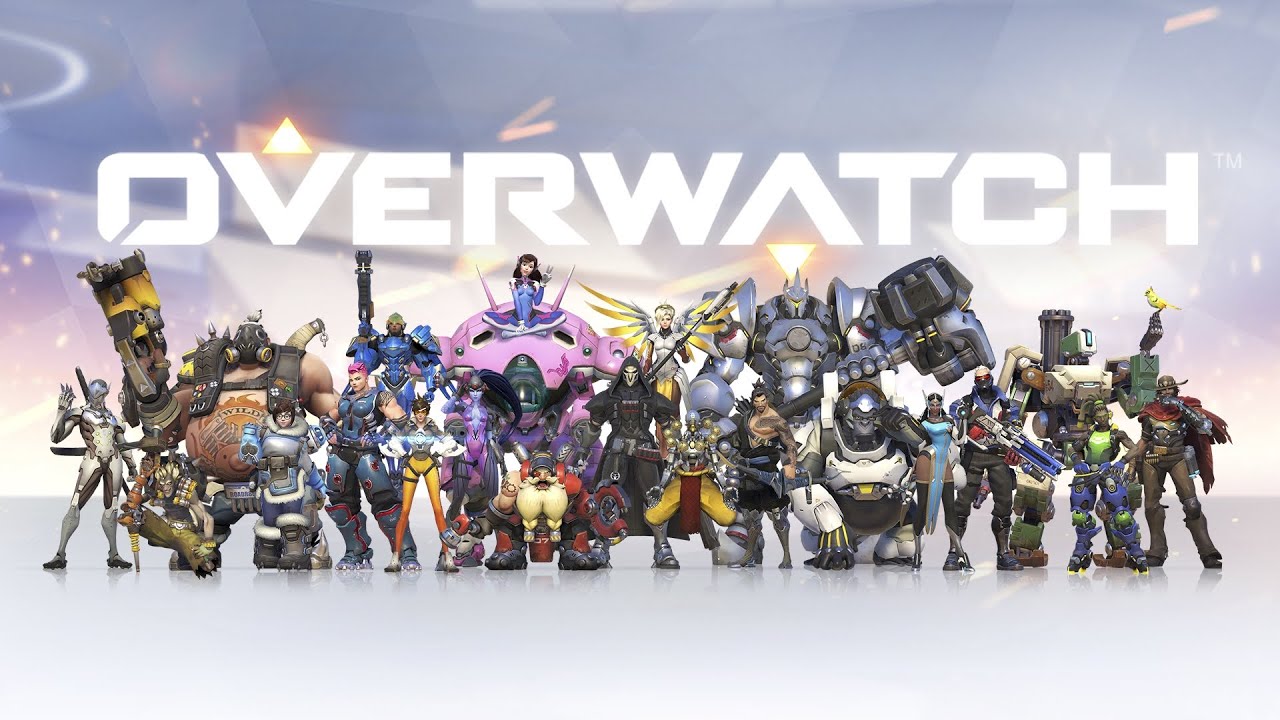
Overwatch and Progression

Overwatch has a progression problem.

Image result for Overwatch
Source
Overwatch is a fantastic game in so many ways. It's got stellar characters, great maps, grade A game design, and some spectacular sound. But outside that, the actual game, it's got a glaring issue I want to discuss here today. You see, Overwatch has a terrible, terrible progression system.

Now, some of you may be shrugging your shoulders right now and saying “so what”? I'll get back to why this is so bad in a bit, but first I want to start by breaking down how Overwatch fails in this area.

I like to divide successful progression systems into 3 general categories. Gameplay based, unlockable based, and change based.

Gameplay based progression systems either let you unlock more gameplay elements (think Call of Duty), or they let you customize loadouts for many different playstyles (again, like Call of Duty). This lets the player play around with the mechanics the more they play, and the progression comes from a deeper understanding of the game mechanics. Note that this does not just mean getting better at the game. It comes from being able to unlock/use customization ways to change how your character can play.

Unlockable based is a catch-all term for anything you can unlock that doesn't affect gameplay. Cosmetics, emotes, that sort of stuff. It provides progression in the form of more fun stuff to show off, and the ability to customize yourself how you want.

Finally, change based progression is the type of change where the game is balanced and updated over the years. Adding new content and changing the current content, essentially. Look at any MOBA, with many characters and items to tweak, and how different the meta will be from month to month, and you get the idea. This can only really work if the developer constantly updates and supports the game.

So, how does this all relate to Overwatch? Quite simply, Overwatch lacks a good, solid foundation for any of these progression systems. It has nothing to unlock in the gameplay department, as all the characters are open from the start, and no way to change any of the character's playstyles or moves. It doesn't lend itself well to change based progression, as there are only 22 characters to change and update, so Blizzard can't update the meta very much. And finally, I think we can all agree a luck based system for unlockables is a horrible idea.

The loot box system is the only concrete progression Overwatch has, and it fails on nearly every level. It doesn't give the player a goal to work toward, because they can't control what items they buy. Even with the caveat that you can get gold from duplicates, it still means that how much you save is entirely dictated by RNG. And there are seasonal items, still dictated by RNG, but with a time limit, meaning players are locked out from some items as well.

We can quibble all day about why this was done in this manner, but that's unimportant. What is moreso is why Overwatch not having a satisfying progression system is important, and here we come back to what I mentioned at the start. A lot of people reading this are going to say, “So what?” To a lot of people, the raw gameplay should be what really matters, with cosmetics and progression not being all that important. And that's fine, because it's not what's really important to you.

Here's the issue. Raw gameplay isn't enough to keep a lot of people playing for a long time. A lot of people want change as they play, whether that be through gameplay or cosmetics. Having a bad progression system can really hamper how long a game lasts for, as a lot of people aren't going to keep playing if there's nothing satisfying to work towards.

Gameplay isn't enough to keep a lot of people engaged if they're not aiming to get truly good at the game. Overwatch is a special case because it's a lot more cheery and casual than other shooters in tone. A lot of people are going to be playing it because of the characters and world. How do you think they'll feel when the unlocks that let them have fun with the world are completely out of their control?

Overwatch having a bad progression system is not a gameplay issue, it's not a game world issue, and for the truly dedicated, this really isn't an issue in the first place. It's a reach issue. If Overwatch wants to engage more people and get them talking, it would do well to ensure as many people can be motivated as possible.

Saturday, 17 September 2016

PC Master Race is Everything Wrong with Games

This is not hyperbole.

The entire concept of the “PC Master Race” joke is something that already comes from a place of relatively uncomfortable humor, but it's morphed into something much, much more. It's bad for the industry, it's bad for the perception of it, and it embodies all the negative aspects of this business.

Exclusion

If you asked me when the biggest attitude problem in the industry was, I'd answer with “exclusion”. Gamers trying to exclude people from an already pretty high-entry hobby are seriously the worst sometimes. Gaming can already cost hundreds of dollars, and then people will say stuff like “You play mobile games, you're not a REAL gamer”, and other crap like that. It's why gaming doesn't have a good reputation by most people who don't play them.

You can already see how the “PC master race” thing is exclusionary, I hope. It excludes people who prefer to play games on consoles (See “console peasants”). It excludes those with lower end PC's and those who play mobile games. And it excludes those who don't play games in the first place.

I do not care that it is a joke. It's an extremely poor one, and one that does nothing good for the medium. It makes people look like elitist jerks, and is one of the most cited reasons behind why people I know don't game on PC. They think the community is elitist because of stuff like this. Ditto for people who don't even play games.

Conflict

Beyond even the exclusion, it creates conflict in the industry, and not the good kind. The good kind of conflict has people with opposing opinions talking, comparing, and ultimately coming to understand both sides better.

The
bad side is one we see more often, unfortunately. The typical “You suck”, “F*** you, you suck” back and forth does nothing of worth, and just leads to a whole lot of anger.

Yeah, PC master race encourages this, too. The stance it takes is as follows: “PC's are the best, and anyone who says otherwise is inferior.” How in any way does this facilitate discussion? It does the exact opposite. Insulting one group and holding another up is a bad way to go about things. It's what prevents people from rationally discussing stuff like Playstation Vs. Xbox, and contributes to all sorts of insults on forums. You ever wonder why people get so mad over games? Conflict encouragement is why.

Context

Finally, I want to cover one last thing about this topic. The wider context PC master race fits into shows off just how the industry is going to be perceived if we don't change something.

PC master race, in a modern context, brings up memories of Hitler, and his concept of an Aryan “master race”. It's not exactly a nice memory, and it's one that this “joke” handles awfully.

It's going to be taken badly. Either gamers don't give a shit about the awfulness of WWII and just wanna go make jokes about it, or they don't realize and are ignorant of the culture that isn't gaming. Either way, it makes gamers look insensitive.

And I get it, it is a joke. But it represents so much bad stuff in this industry, it's not even funny. I've listed 3, but there is so much more. “It's just a joke” only goes so far before the joke becomes more than just a meaningless bit of fun, before it starts to represent something. It's only so far before it morphs into something meaningful, and at that point it's irresponsible to pretend otherwise.

This idea is a great checklist for the cultural shift this industry needs, and what it needs to shift away from. We should take advantage of that.

Thursday, 15 September 2016

Happy Birthday, Undertale

Holy shit, it's been a year.

Image result for Undertale logo
 
It was September when i first heard about Undertale. Everyone I knew that was into games was talking about it. I only caught brief glimpses of it, and was honestly very confused. For the next few months, it was everywhere, and I do mean everywhere. After months of hype, I decided to see what this game was all about.

Best damn gaming decision I've ever made.

A year on, Undertale still stands as my favourite game ever. It's an experience I'm never going to forget, and one that will undoubtedly impact anyone that's played it. So, one year later, this is why Undertale remains #1 on my list of video games.

Oh, and spoilers. Why haven't you played Undertale yet?

Let's start at the beginning

I went into Undertale 99% blind. I saw a bit of the sans fight, the ruins, and a brief colourful glimpse I didn't realize was the Asriel fight. That's important, because Undertale starts out so unassuming, so small, so basic. It has a lot of personality, but nothing much else at that point.

Then Toriel showed up, and punched me in the gut. I love it when a game turns all your expectations around in once moment, and Toriel does just that. The game tells you that some monsters may need to have their health reduced. It shows itself as a simple RPG. It stays faithful to the retro aesthetic. It's not very serious.

The game does all this to fool you into thinking that it is indeed nothing more than it seems. Then, BAM, Toriel is dead, my knowledge about sparing monsters seemed wrong, and it's not just a goofy retro RPG anymore. There's death. There's emotion. There's tragedy. The first hour of the game sounds dreadfully boring, but it's so important for building up your expectations. Everything I knew was wrong, and now I had to travel into an unknown world that I knew nothing about. That is when Undertale had me interested.

Let's talk emotions

Undertale's got em'. This has been talked about to death by almost everyone, but I wanted to talk about what Undertale did for me. Undertale, more than anything else, was genuine at a time I needed it.

2015 was a rough year for my optimism in the games industry. I saw publishers try to squeeze money out of everyone in every way, I saw Nintendo starting to go down the same route after I supported them, and from my perspective (A misguided one now that I look back), the whole thing just cared about money.

So a game that just wanted to be a good game was just what I needed at the time. Undertale's quirky humour and random dialogue felt like a breath of fresh air. The battle system felt like something new and fresh. And this willingness to get into something new played a large part in how much the game pulled me in.

The game does have genuine emotion, I'm not discounting that. Papyrus is hilarious, Undyne and Alphys are adorable, Metatton is......

Flowey is legit terrifying, and the fight with Asgore is one of the few times I will use the word “epic” to describe something. What I am saying is that Undertale resonated with me because it just does what it wants. It's not restrained by doing what it thinks the audience wants, nor is it trying to do the “current” thing. The emotion isn't a list of check marks. It's genuine.

Undertunes

I remember the exact moment I knew I was gonna love Undertale. I had just arrived in Snowdin, and went to fight Papyrus because I wanted more of his dialogue. The fight started. I flirted with him (If you don't get it you need to get out because you haven't played it), and he activated his special blue attack!

Then Bonetrousle kicked in.


This was when I first thought “Holy cow, this is some amazing music!” It perfectly fit the scenario, character, battle, and raised it from a great fight to a fantastic fight with some sweet tunes.

And it just went uphill from there. From Spear of Justice to Dummy! to CORE, every single song is not only nice on its own, it also lifts every scene and scenario up to amazingly emotional levels.


When I traversed the waterfall, the music made me feel sorrowful and introspective, like this area held the ideals of freedom and wildness once held by the monsters.


When I fought Undyne, her theme was menacing. Here was an opponent actually trying to kill me for the first time, and the entirety of monsterkind would back her in this quest.


When I fought Omega Flowey, this theme instilled a level of panic in me the scenario by itself could never do. It felt like I was trapped in the madness for hours.


When I listened to the title theme, it was a retro jingle, one I'd heard many times over. After I finished the game, it was an opener to an amazingly realized and full experience.


When I fought ASGORE, this song was chilling, sorrowful, terrifying, awe-inspiring, regretful, epic, and final. This song embodied so many things, but more than anything else, it embodies the end of a journey, with all the mixed up emotions that come with it. It is one of the most emotional songs I have ever heard, and truly makes the battle against Asgore one of gaming's greatest. Undertale's soundtrack is legendary.

My emotions

Finally, I want to end off with something very personal to me. It was the moment Undertale connected with me in a deep way unlike most other games and media in general.


This song, and the walk you take with it, is burned into my head. It let me just think about everything that had led up to this point. Toriel, mosterkind's fate, Flowey, Asgore....

It let me think about loss.

Loss is something I am terrified of. Loss is something I worry about daily. What will happen to my friends after high school? Will my family still be here tomorrow? Is there anything I can do?

Undertale just gave me a scenario, a story, a song, and let me think. Those 6 minutes are precious to me. I thought about loss in the game. I thought about the loss I have faced and will inevitably have to face. I thought about the loss that occurs every day, by many people. I just stared at the screen even after the song was done, and just thought.

I couldn't sleep that night. No other game since Mother 3 has done that to me. The next day, I got up, and fought Asgore.

I cried. I cried tears of all kinds. I cried tears of sorrow, loss, and sadness, but also happiness, laughter, and appreciation. Undertale is the only game, no, time that I have ever, ever, experienced tears of joy.

This is why Undertale is my favourite game of all time. I could talk about how objectively good it is. But truly, it came at the perfect time. 7 months later, I lost a relative close to me. It is experiences like this that help me to understand, cope, and get through all sorts of things in this crazy experience called life. This is my personal connection to this small game called Undertale.

I truly and deeply thank you for reading.