Showing posts with label Shooter. Show all posts

Monday, 26 September 2016

Overwatch and Progression

Overwatch has a progression problem.
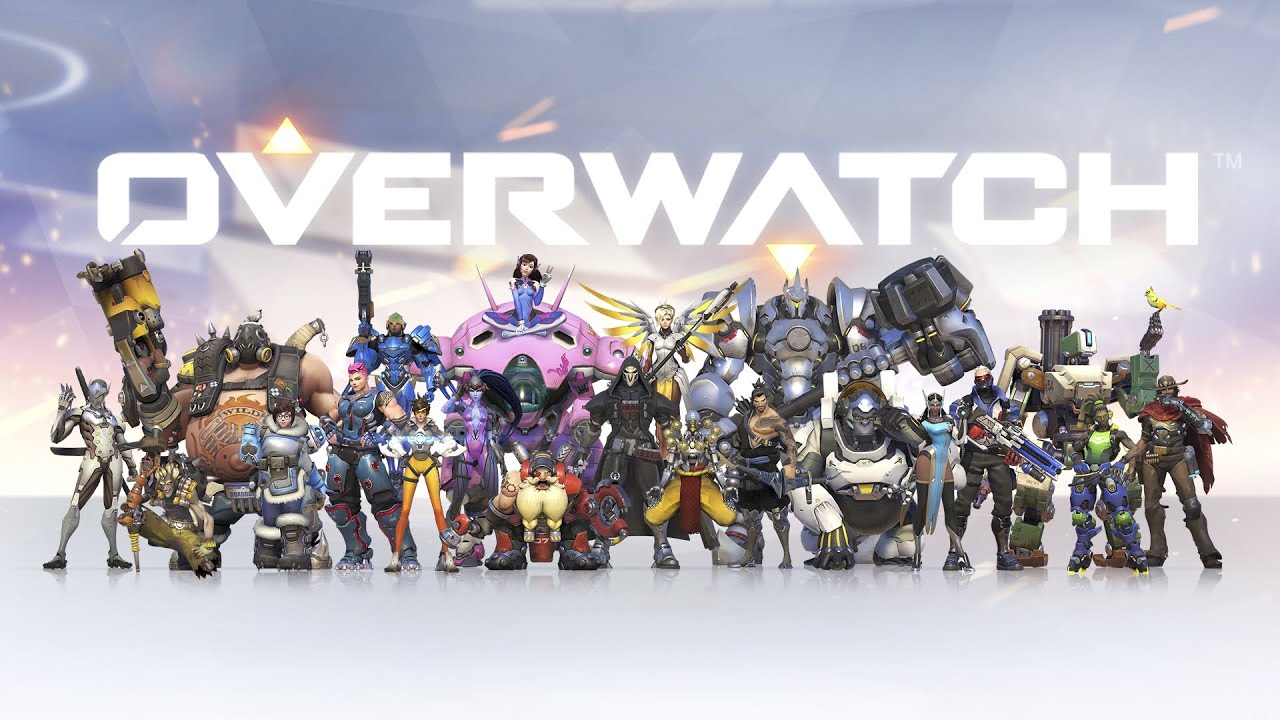
Image result for Overwatch
Source
Overwatch is a fantastic game in so many ways. It's got stellar characters, great maps, grade A game design, and some spectacular sound. But outside that, the actual game, it's got a glaring issue I want to discuss here today. You see, Overwatch has a terrible, terrible progression system.

Now, some of you may be shrugging your shoulders right now and saying “so what”? I'll get back to why this is so bad in a bit, but first I want to start by breaking down how Overwatch fails in this area.

I like to divide successful progression systems into 3 general categories. Gameplay based, unlockable based, and change based.

Gameplay based progression systems either let you unlock more gameplay elements (think Call of Duty), or they let you customize loadouts for many different playstyles (again, like Call of Duty). This lets the player play around with the mechanics the more they play, and the progression comes from a deeper understanding of the game mechanics. Note that this does not just mean getting better at the game. It comes from being able to unlock/use customization ways to change how your character can play.

Unlockable based is a catch-all term for anything you can unlock that doesn't affect gameplay. Cosmetics, emotes, that sort of stuff. It provides progression in the form of more fun stuff to show off, and the ability to customize yourself how you want.

Finally, change based progression is the type of change where the game is balanced and updated over the years. Adding new content and changing the current content, essentially. Look at any MOBA, with many characters and items to tweak, and how different the meta will be from month to month, and you get the idea. This can only really work if the developer constantly updates and supports the game.

So, how does this all relate to Overwatch? Quite simply, Overwatch lacks a good, solid foundation for any of these progression systems. It has nothing to unlock in the gameplay department, as all the characters are open from the start, and no way to change any of the character's playstyles or moves. It doesn't lend itself well to change based progression, as there are only 22 characters to change and update, so Blizzard can't update the meta very much. And finally, I think we can all agree a luck based system for unlockables is a horrible idea.

The loot box system is the only concrete progression Overwatch has, and it fails on nearly every level. It doesn't give the player a goal to work toward, because they can't control what items they buy. Even with the caveat that you can get gold from duplicates, it still means that how much you save is entirely dictated by RNG. And there are seasonal items, still dictated by RNG, but with a time limit, meaning players are locked out from some items as well.

We can quibble all day about why this was done in this manner, but that's unimportant. What is moreso is why Overwatch not having a satisfying progression system is important, and here we come back to what I mentioned at the start. A lot of people reading this are going to say, “So what?” To a lot of people, the raw gameplay should be what really matters, with cosmetics and progression not being all that important. And that's fine, because it's not what's really important to you.

Here's the issue. Raw gameplay isn't enough to keep a lot of people playing for a long time. A lot of people want change as they play, whether that be through gameplay or cosmetics. Having a bad progression system can really hamper how long a game lasts for, as a lot of people aren't going to keep playing if there's nothing satisfying to work towards.

Gameplay isn't enough to keep a lot of people engaged if they're not aiming to get truly good at the game. Overwatch is a special case because it's a lot more cheery and casual than other shooters in tone. A lot of people are going to be playing it because of the characters and world. How do you think they'll feel when the unlocks that let them have fun with the world are completely out of their control?

Overwatch having a bad progression system is not a gameplay issue, it's not a game world issue, and for the truly dedicated, this really isn't an issue in the first place. It's a reach issue. If Overwatch wants to engage more people and get them talking, it would do well to ensure as many people can be motivated as possible.

Saturday, 2 July 2016

Some Unique Mechanics

Game mechanics. Oh, the wonders of game mechanics. I love em', you love em', they're what make games tick. So, I figured, why not take the time to appreciate the more unique ones out there? So, I have 3 games lined up here, 3 games that do some different and unique stuff with their mechanics. Without further ado:
Splatoon


Okay, I have issues with this game. BIG issues. But I cannot ignore just how good the core mechanics of the game are, because I have no idea how the devs at Nintendo came up with this. So, for those not up to speed with the game, you do 2 basic things in the game: spray ink with a variety of weapons, and then swim through that same ink in a squid form. You can only swim through your own ink, and the objective of the game is to cover the most ground with ink (In the main mode, anyway).

Not only is this really novel and a great spin on the typical shooter formula, but it is a perfect example of 2 separate mechanics working perfectly in harmony. You shoot ink to swim in, but you have a limited supply, and the way you refill it is to swim in the ink. But you need more ground to swim in, so you spray more ink, which means you need to refill by swimming, and so on and so forth. One mechanic simply cannot exist without the other, and you constantly combine the 2 in interesting ways while you play. Whether that be cutting an enemy's route off with your ink, or spraying a small patch to hide and refill in undetected, these 2 simple ideas; shoot and swim; form the cornerstone for one of the most colourful, explosive, and special shooter games that have ever come out.

And I really can't stress how special indeed this is. Think to all the shooter games out there, how many truly put a spin on the typical shooter formula? Barely any deviate, and the only example I can think of that kind of fits this is Tribes: Ascend. The point here is how unique this is, and how badly this genre needs a mechanics shakeup more than anything else around it. Hopefully Splatoon's success is a good start.

Undertale


You may or may not be screaming in your head “Undertaleohgodwhypleasenomore”, but fear not! This shall not be me going on a ramble about the amazingness of this game. I want to talk about something seldom mentioned, the actual gameplay. More specifically, the bullet hell like mechanics you use to dodge attacks.

Genre mashing is something I wish we saw more of. I have my issues with how the word “genre” is used, but overall it's a handy sorting tool in many circumstances, and a good jumping off point if you're unsure how to describe a game. Genre mashing is the process of taking 2 genres and things from them, like, say, a first person shooter and an RTS, and putting them together into one game. It's a risky move, but I still think it's a shame how segued and cut off the different types of games often are in the industry.

So Undertale is a great reminder how good this practice can turn out. It mashes together the menu and general feel of a standard RPG, while having you dodge attacks through a bullet hell minigame a la Touhou (It's not THAT crazy though). It really lends the game a different feel, as most of your skill involved comes from mastery of this minigame and not the RPG aspects. Those are mainly just a way to interact with the world and choose what to do. It's so simple and elegant, you wonder how nobody thought of this before.

So while Undertale is most certainly not the first game to mash genres, it's a good reminder in this often oversaturated market how there are still many, many untapped ideas and mechanics out there. I'm excited to see them.

Zero Escape: Virtue's Last Reward


Ok, this game is very story heavy and I'm loath to spoil it. I'll be talking about the mechanics and the scenario, so if you consider those spoilers, stop here. No plot beyond that, however.

So VLR (How I'll be abbreviating Virtue's Last Reward) does one thing for mechanics that is truly unique. It takes an age old psychological problem and turns it into a gameplay mechanic. And it is brilliant.

So said problem is the Prisoner's Dilemma. For the uninitiated it goes such: 2 prisoners are brought in on a minor crime, and the police think they did a large one. So they separate the 2 and give them 2 options: rat the other out or stay silent. If they both stay silent, they each get 1 year in jail. If one rats but the other stays silent, the betrayer goes free and the silent one gets 4 years. If they both rat the other out they each get 3 years. It's a system designed to logically designed to make both betray, as if there is even the slightest chance the other will betray you should too, or else you get screwed. In reality when mockups have been made it's not so cut and dry, with prior relationships and the implications of betrayal beyond the jailtime playing a large role. And VLR plays this beautifully.

The game runs off this. The 9 players are trapped in a facility and forced to play a sort of Prisoner's Dilemma. They each have a watch with a point value on it, and every “round” they have to play the Dilemma with another person, and choose ally or betray. If both ally, they each get 2 points. If both betray, no points are gained or lost. If one betrays and one allies, the betrayer gets 3 points and the victim loses 2. If your points hit 0, you die. The goal is to escape through the #9 door after your points hit 9. The catch is that the #9 door can only be opened once.

So VLR locks you in with 8 other people and forces you to choose: Ally, or Betray? It's not just a simple cooperation situation, as the stakes are constantly rising and nobody is quite sure what lies ahead. So if one person decides to be a lone wolf and choose betray, they could get out and screw everyone else over, ensuring their own safety. But if everyone thinks this and chooses betray, nobody gets anywhere.

But points aren't everything, no sir. VLR makes damn well sure you know what betrayal means outside of this point system. Characters will react appropriately if you're a cooperative saint or a betraying jerk. For example, if you try to game the system and get as many points as possible by betraying, the group will turn on you very quickly. If a character confides in you how much they trust you and you stab them in the back, your relationship fractures. It will affect the story and ending you get, big time.

And finally, this retooling of the Prisoner Dilemma works very well in tandem with the multiple endings and routes. You'll start to pick things up and notice character traits that apply in every route. You'll learn stuff that you can apply in the future, and predict how characters will vote and how they'll react to your vote. For a single example, Dio's a dick, big time (apparently Dio is a name that inspires such behavior in media), and you have to take that into account when voting against him.

This perfect blend of high stakes, a psychological question, characters, and the game mechanic of multiple routes makes an amazing experience. The voting in VLR is one of the tensest experiences in gaming simply because of all this. I have spent a full hour agonizing over my choice because there is never a right answer with all these factors at play. It's an assault on your morals and a test of your trust with these fictional characters, and heartbreaking decisions will surely lie ahead.

So, to recap that crazy ramble, this is just so unique because of how it retools an age old question, and how it interacts with the usual visual novel mechanic of multiple routes. But the sheer idea behind it is what impresses me the most. Would you have thought of a game relying on the prisoner's dilemma like this? Most likely not, and we need more ideas out of left field like it. It makes for more interesting games, stories, and experiences. And play the Zero Escape series if you haven't. It's literally one of the best stories in gaming.


So, I hope you enjoyed this small trek through the more inventive side of gaming. I certainly love checking the odd and different areas of it out, and I hope you give some of these games a try, they're all very much worth your time. Thank you for reading, and have a great day.