Sunday, 28 August 2016

Khezu: An Exercise in Bad Game Design

No, this article isn't only for those into Monster Hunter, don't let that scare you away. I'm not here to tear into my personal issues with this game I can't stop playing, though that would be supremely satisfying. No, we're talking game design, ladies and gentlemen.

Image result for Monster hunter

Now, for the uninitiated, here's a quick rundown. In Monster Hunter, you fight various monsters of various shapes and sizes to get their parts and then make equipment out of them. Generally, the way of getting better is learning the monster “tells”, or how they move before taking certain actions, so you know what's coming. That's what's really important here. The general loop is that you need to fight monsters over and over for certain parts, and in doing so you learn the tells and get very good at fighting them (Ingenious game design, I might add).

And if you want an example of a game going totally off the rails and producing a substandard gameplay scenario, the Khezu is it. This monster has everything. Bland design. Terrible tells. God awful design choices around it.

And I also might be angry because it came back AGAIN in Generations dear god why

Image result for Khezu

Let us start with the design, and already everything is so, so wrong. See, most monsters have an immediately enlightening design. If you look at the Rathian, for example, she has a big, spiky tail, huge wings, and looks like a stereotypical dragon in a lot of ways. Unsurprisingly, she has many tail attacks, flies around a lot, and breaths fire. The design gives you a hint of what it can do right out of the gate, playing into learning the moveset. That's great design.

Image result for Rathian

The Khezu does not do that. Let's just take a quick look at some of its more unique features:
  1. It has a head that can extend very far for some medium ranged attacks.
  2. It can generate electricity from its body and mouth.
  3. It can climb on walls to escape.
  4. It has a very hard tail that you can't really attack for the most part.
  5. One of the louder roars in the game.
I ask you, where is any of this communicated on this monster's design? The head doesn't have anything that looks extendable. Nothing about it looks even remotely related to electricity. You're not going to see the bottom of its feet, which do look like they could climb on walls. Moot point if you can't see them, though. The tail looks exactly like the rest of the body. And how am I supposed to guess that the roar is going to be crazy loud?

None of this really matters after the initial encounter, yes. Once you know the attacks, the design communicating potential attacks isn't needed. But it shows sloppiness and a lack of caring, stuff that really does carry over to the rest of this monster.

See, my issues with Khezu are mainly in the fight itself, AKA the “Screw you, blademasters” fight. Let us start with a seemingly innocuous thing, the fact that the Khezu climbs on walls. Seems harmless, right? Yeah, no. What this actually does is make it impossible to attack if you're using a melee weapon (May I remind you, 11 out of the 14 weapons are melee). Waiting is not fun in games. Think we can all agree on that. What this does if force most hunters to run around dodging slow electricity balls for a minute, with no chance to counterattack or do anything of substance. It is boring, unfun, and just not well thought out.

Second on my list of grievances is the Khezu's favourite attack, surrounding itself in electricity. The issue here is the tell. Khezu sparks with electricity for about a second then surrounds itself in electricity, which does sound like a reasonable windup. The issue is that this, again, screws any and all melee weapon users. For many weapons, if you're currently right beside Khezu, there's simply not enough time to actually get away once the tell begins. Sheathing your weapon in this game to run faster takes a full second, which means you're very likely to get hit.

And when it comes to gameplay, making about 3 quarters of your weapons a bad choice against one monster is simply not good design. Making one or two univiable is actually a good idea in many circumstances. It can force people away from their comfort picks so they actually try something new, therefore seeing more of the game. But you limit, rather than expand, if you make most of your weapons a subpar choice. Even in the intention was to get people to try out gunner weapons, it's still a bad choice because you need a whole new set of armour to use gunner weapons. You're making people decide between a terrible hunt or grinding for a whole new set of armour, not an attractive one to be sure.

And yes, there are ways to get around this monster in more recent games. Using adept style in Generations lets you dodge through the electricity, and does mitigate a lot of my issues. It's still bad design if you're pigeonholed into a very specific gameplay style just because you use blademaster weapons.

There's also just a lot of baffling design choices made for seemingly no good reason. Why does the Khezu have no battle music? Is it supposed to be for immersion, since it can't “see” you, only “smell” you? Immersion here comes at the cost of a lifeless and silent fight. I thought my game was glitched when I first fought it, a player shouldn't think that!

In the same vein of bad design, what parts am I supposed to break? If you don't know, you can attack and break certain parts of a monster to get more crafting materials. But the Khezu is all a grey blob, with no standout parts. Using the Rathian from before, the tail and wings are very prominent, and look breakable. Lo and behold, the tail can be cut off, and the wings cracked. Can the back of the Khezu be broken? The head? The tail? There are no stand out indicators here. 

So it is with bafflement that I look at Khezu. Look at the monsters in this series, and they have varied designs, fun fights, and all show evidence of thought and effort put into them. Then there's Khezu, who looks so out of place with the sloppy design, lopsided fight, and baffling design choices. Regardless, I will continue to use this monster as a great example of bad design in a good game, and how even the best developers aren't foolproof.

Thursday, 11 August 2016

Why I dropped Bioshock Infinite

I never finished Bioshock Infinite. Never even remotely got into it, really. Does that disqualify me from critiquing it? Maybe as a whole, but I feel the beginning of a game is so vital, and you can spot far reaching issues in those first hours.


You see, what the game does at the start shows a way of thinking and design philosophy that I absolutely knew would not change. It shows a disregard for an artistically sound and consistent experience, and produces quite honestly nothing more than a complex facade that makes the game appear thoughtful, when in reality it shows some of the worst writing I have seen in a while.

It's a game, right?

Chief among these issues is how the game seems to forget, quite honestly, that it's a game much of the time. There were 2 crazy long portions of the game with no substantive gameplay in the bit I played. First was the intro, where you just walk around and pick stuff up as you see the city around you. As well, the sequence where you try to get to Elizabeth in the tower is just a lot of walking and looking.

These sequences fail for a number of reasons. First, because there's not much to discover or think on. If I was a game developer and wanted to put a sequence such as this in, it would have to be for a damn good reason. Maybe the player needs time to take something vital and plot-twisting in and gameplay wouldn't let them think on it. Whatever the reason, Infinite doesn't have a good one. In the first sequence, you will pick up very, very fast that Columbia is an old fashioned city in the sky. The 2nd one starts off a bit better, but once you learn that the city fears what Elizabeth may be, you're just halfway through, and past that point you learn absolutely nothing.

What Infinite doesn't seem to understand is that slowly seeing more of a place means nothing if that more doesn't teach you anything. I don't care about seeing more of a city if all I need to know (Old fashioned, floating, very religious) was discovered 10 minutes ago. I don't care about seeing more of a prison if all I'm going to know was discovered in the first 5 minutes. No gameplay is useful to take information in, but it has to be constant, relevant, and quick, because the absolute second you dawdle or give useless information, your time would be much better spent on actual gameplay.

Infinite seems to think more visuals are interesting. They're not.

Oh god, why did you do that?

When I see characters acting stupid just to push the plot, I will get the hell out while I can. It's not only bad for the plot, it shows bad, bad writing skills that signal a messy plot to me. I have a habit of dropping stories that show this, and Infinite was no different.

But this game may just have broken a record for how fast they passed the idiot ball over to the entire cast of the game. First, they show the sign of the “False Shepard” on a poster, which Booker has on the back of his hand. Rather than covering it up because obviously it's a bad thing to have, he just traipses around with it for all to see, and he eventually gets caught. This is to give a reason for the first combat encounter of the game to occur because the police see the mark. They could have done this in literally any other way. They could have had Booker cover it up with a bandage, accidentally raise the suspicions of the police, and then they uncover the mark. I literally just wrote a better plot point than the people who are actually paid to write this.

Why does the populace ignorantly go about their business after Booker slaughters dozens of police? Idiot ball. Why do the people of Columbia never take advantage of the magical powers vigors provide? Idiot ball. Why does Booker immediately start murdering police in front of the girl he's supposed to be rescuing, thereby terrifying her? Idiot. Ball.

That last one is my personal favourite, because right after she runs away from you, quite realistically because you just killed dozens of people. For that brief moment, I thought “FINALLY, someone says and does something that makes frakking sense!”. But she is then instantly convinced that Booker's fine and happily walks through the city with him.

That's when I stopped playing.

Ludonarrative Dissonance

Those 2 words are my absolute favourite term about gaming. It refers to the intersection of gameplay (Ludo) and the story (Narrative) within a game. Bioshock Infinite has a massive case of Ludonarrative dissonance, one unlike any other I have ever seen.

The gameplay is all about desperate survival. Fast paced shooting, scavenging supplies, using vigors for your own purposes, it all communicates dirty and violent combat just to survive. And that's all well and good, carried over from the last game where that indeed was the setting.

Only the setting here is a prim and proper city that had no conflict before you arrived, where the vigors have no place in, where scavenging should be the last thing you need to do. This issue has been well documented, and I feel no need to expand on the issue itself.

Instead I want to actually, fully, and honestly draw attention to why this literally failing basic game design 101. You see, motivation is key when it comes to making a compelling gameplay scenario. If there's not a good reason for you doing the stuff you are, it becomes flat, unmotivational, and will make little sense. This happens in every well made game. Whether story driven (Insert story reason here), multiplayer (Winning over real people), or some reward (Awesome new sword), there's gotta be a good reason why you're playing the game.

Infinite lacks that in a big way. It appears as though you have a good reason for your actions (Wiping away crippling gambling debts), but it's a bad reason for the audience. We don't know anything about Booker, and this will fail to engage the player. The reason I'm bringing this up in a section about ludonarrative dissonance is that it would be the game's one and only chance to fill in the gap the dissonance leaves.

There's no rhyme or reason to the story interacting with the gameplay. One minute you're shooting up a ticket station, the next you're happily taking in the sights of a carnival. I checked before dropping it for good, and the game doesn't really ever solve this issue, proving my suspicions right. Ludonarrative dissonance guts the story, makes the gameplay feel off, and again, shows sloppy writing and a general lack of thought. This is what happens when you plunk one game's mechanics into a completely different setting. It should have never happened.

Ok. What's the point here?

A lot of this sounds like simple critique of a game, but my overarching point here is that I saw all this in the first 3 hours. I went from the opening scene to the firefight in the carnival. I saw a game not caring about proper pacing of gameplay, and only cared about the “deep” story. In that story, I saw desperate attempts to appear deep yet in actuality doing very little. I saw a game giving absolutely no thought to how the story and gameplay worked together. I saw a terrible plot for the sake of gameplay, and choppy gameplay so they could insert “thoughtful” story. I saw a badly thought out, sloppy experience that had no value in continuing.

Bioshock Infinite felt like the game that best represented bad “AAA” games of the last generation. It felt like it was simply checking off boxes to make a successful yet thoughtful game, yet not actually thinking about those boxes. Complex story? Check. Messages about religion and racism? Check. A sweeping soundtrack? Check. Standard shooting gameplay that ever consumer knows about? Check.

Bioshock Infinite checks those boxes and nothing else. It has a complex story, yet fails at almost every basic storytelling post. It has messages about religion and racism, but really it has nothing to say and only put them there to appear like it does have something to say. It has a sweeping soundtrack, but a soundtrack that has nothing lasting. It has standard shooting gameplay, only put there because it's popular, ignoring the fact that it doesn't fit the story at all.


I saw Bioshock Infinite as a manufactured, false, focus tested, passionless game in the first 3 hours. That's not the kind of game that deserves my time.

Monday, 8 August 2016

The best fighting game?

Rivals of Aether is the best damn fighting game you can spend money on right now.


I say this as someone who is absolutely terrible at fighting games. I know I'll never even remotely approach great levels of play, I routinely get stomped online, and advanced combos and techniques are a mere pipe dream for me. And despite all that, it's so good, you guys. It's never going to be the game I'll spend the most hours on. It's never going to be a scene I passionately follow. And yet, I see the genius in it, the passion of the creator and community, and my honest assessment is that if you're looking for a new fighter, this is the one you should be at the very least be paying attention to.

So, uh, what is it?

Good question! Rivals is a fighting game unquestionably inspired by Super Smash Brothers. If know anything about it, you'll know how this game works. Damage percentage goes up, and you try to knock your opponent off the stage. It's stuff that's been done before, but don't think it's just a clone. It's merely using the framework of Smash, nothing more.


The art style, as you can see, is pixel art, a hallmark of the indie scene. It as of now contains 8 characters, a kickass soundtrack, and a small but dedicated community. This is definitely an indie fighting game.

It's sooooo fun

I'm just gonna cut to the chase. Rivals is a ton of competitive, fluid, satisfying fun. Again, it plays very much like Smash Bros., but with some key differences. Rivals of Aether makes it much easier to pull combos off, so chaining attacks is much easier. There are no shields, but rather a parry move. Dodging isn't as effective, but recovery is made a bit easier since every character can wall cling. What I'm getting at here is that it's a much faster, more fluid, and very, very exciting. In an average match you'll be parrying, combing, and edge guarding at a frantic rate that I find fantastic. If you find Smash Bros. too slow, you'll be right at home here.


The stages are much appreciated as well. Most fighting games either have flat stages or wildly unbalanced stages. Rivals has the unbalanced stages for party fun, but you can also turn basic mode on and remove the crazy stage hazards, and leave only basic platforms for serious fighting. It's a great addition, and much better than nothing but flat stages coughforglorycough.

And as of right now, it's super easy to understand. Only 8 characters sounds limited, but honestly it's a great boon. You don't have to learn crazy amounts of matchups and learn 50 characters, just the 8. This makes the game click a lot faster, which lowers the barrier of at least understanding.


Finally, at least on the gameplay front, the game's got a lot of really unique ideas I haven't seen anywhere else. Zetterburn can get extra launching power by setting you on fire. Forsburn can gain a strong move by inhaling smokescreens. Orcane has puddles he can detonate or teleport to. Wrastor can't perform smash attacks on the ground. Every character has something unique about them, and that gives this game a very nice style and identity. It's quite impressive how balanced this game is as well. Even characters considered lower tier by the community can still be very competetive. I'm not even going to get into the advanced stuff, mainly because that's all really over my head. I'm not very good at the game. But I see all this, and absolutely love it.

Basically, it's really F-ing fun.

It's not all gameplay

Rivals of Aether isn't all great gameplay, however. I also want to draw attention to the visuals and music, because those are excellently done. The animations are very well done, fluid and appealing. They're also not flashy, fast, and don't hold your attention, the best kind for a fighting game. Sure, flashy visuals are nice to watch, but they also distract from actually, y'know, playing the game. Basic stuff, maybe, but I see so many fighting games stumble here, so it's a nice thing to have.


The backgrounds also follow this mantra. While they are nice to look at if you stand still, they don't really move and again, don't distract from the gameplay. (I AM LOOKING SQUARELY AT YOU, SMASH. WHY WOULD YOU HAVE CRAZY MOVING BACKROUNDS IN YOUR SERIOUS COMPETETIVE MODE ONLINE)

In all seriousness...

Ok, but for real, I don't want to compare this game to Smash Bros. much. I'm only doing so because it's a near universal example everyone will understand and it's a great jumping off point. But I want the comparisons to stop there, because it doesn't do this game justice. It is very much it's own thing, and if you play it for even a few minutes, it feels nothing like Smash.

I don't want this game to forever be “That indie smash title” because it's really not. It deserves to be so much more. And the community! How could I forget about the community! It's full of nice, passionate people who glady assist newcomers, pitch ideas, and turn this game into a real treat to discuss. It's a fun, fast, beautiful, competitive, community driven, amazing fighting game.

And it's not even officially out.

The game is still in early access, with so much more to come. I could literally go on for ages about the current game, how it came about, what it could become, and how you should all be running (er, clicking/button mashing) over to Steam/Xbox One and downloading it right now. But really, there's one big fact that excites me more than anything else.

I love the style of Smash Bros. I love the percentages and how you don't drain a life bar. But to me, the community and competitive aspects always felt like they managed in spite of how Nintendo handles it. Rivals of Aether feels like a game that will manage with the help of the developer. And that single fact is truly what makes me run out and shout about this game, more than anything else.

Now if you'll excuse me, I'm gonna go work on my Orcane game. #OrcaneForBestRival

Saturday, 6 August 2016

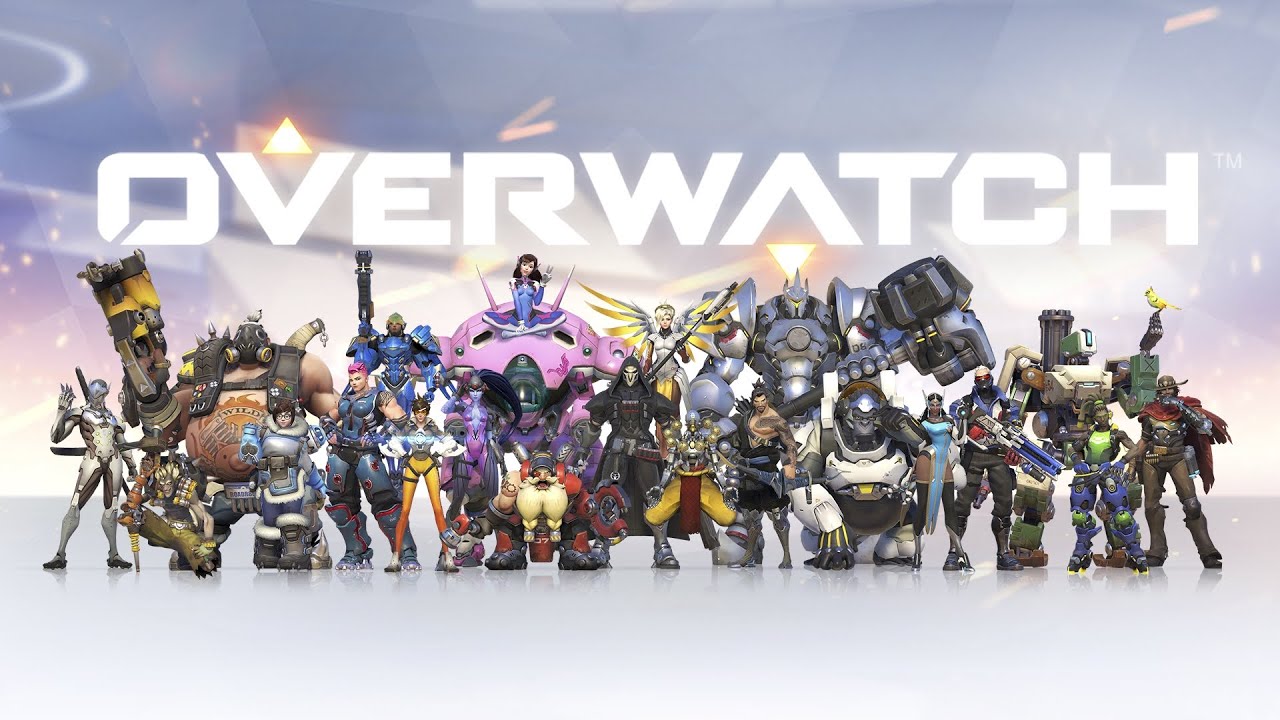
Overwatch, Esports, and going mainstream

You sick of Overwatch yet?


Well, don't be. This game is so far my GOTY for 2016, the most fun I've had with a game in, well, forever, and might be one of the most important games ever made if it's handled well. Oh, you heard me right. Overwatch might be the game that could easily catapult esports into the mainstream in a big way. I'm not being hyperbolic here, not at all. Blizzard might even have some sort of responsibility here. Opportunities like this don't come often.

The Tone

Gaming has always been a rather tricky sell to observers, because it all looks rather... extreme. Complex, fast paced games with a very serious tone aren't the most welcoming products. Call of Duty has gritty and ultra fast combat flying at a crazy pace. League of Legends has numbers everywhere and strategies that one can't even comprehend without prior knowledge of the game. It looks like a brick wall of info and attitude that isn't even worth trying to understand to many.

Overwatch is almost the polar opposite of all this. It's bright, cheery, easy to understand (I'll get to that in a bit), no complex systems, no incomprehensible strategies, and above all is just pleasant to watch. No clutter, just a character doing what they do best.

This is a bigger deal than most think it is, because we can see how accessibility makes games more popular every time. Look at how Pokemon Go absolutely exploded. I can guarantee you it's because it was a free app with easy to understand mechanics. No teams or the 4 move limit or IV's or anything. Just catching and battling Pokemon. Overwatch is simple and easy to understand, much like it.

The Barrier to Entry

And this is a point I am going to rag on and emphasis - to the fullest extent. Overwatch makes so, so much sense. The fact that I basically had each character's kit memorized after one game with them is a good sign of this. The simpler a game is, the better it is as an esport. It lets non-players understand it much faster, and as a result get engaged faster. As an example, let's compare a moveset from League of Legends to a moveset from Overwatch.

I'll start with a character from LOL, Garen. First off, basic statistics about his character's health, damage, speed, that sort of stuff:


Then his abilities. His passive lets him regen health if he has not been hit by other player attacks for a period of time.

His 1st ability gets rid of slows affecting him, lets him charge forward, and strikes an enemy, also silencing them. The movement speed lasts for 1.5/2/2.5/3/3.5 seconds depending on the level. The attack deals 30/55/80/105/130 damage depending on level plus 140% of his attack damage.

His 2nd ability gives him more armour as he defeats enemies. He can activate this ability to reduce incoming damage by 30% for 2/3/4/5/6 seconds depending on level.

His 3rd ability lets him preform a spin attack, dealing damage all around him.It deals 14/18/22/26/30 damage depending on level plus 34/35/36/37/38% of his attack power also depending on level. If you only hit 1 enemy it deals 33% more damage, and you can cancel it to refund cooldown.

His ultimate allows him to deal more damage to the enemy with the most kills. He can activate it to finish a weak enemy, dealing 175/350/525 damage plus 28/33/40% of the target's current health. This damage is true damage if it hits the enemy with the most kills.

Holy hell, that was a lot of stuff for one single champion, and League has over 100! Now, that works fine if you want to play the game at at least a semi competent level, as you will naturally pick up this info. However, imagine someone trying to watch a game of LOL while not knowing much about it. It would be maddeningly difficult to even figure out what's going on in most circumstances.

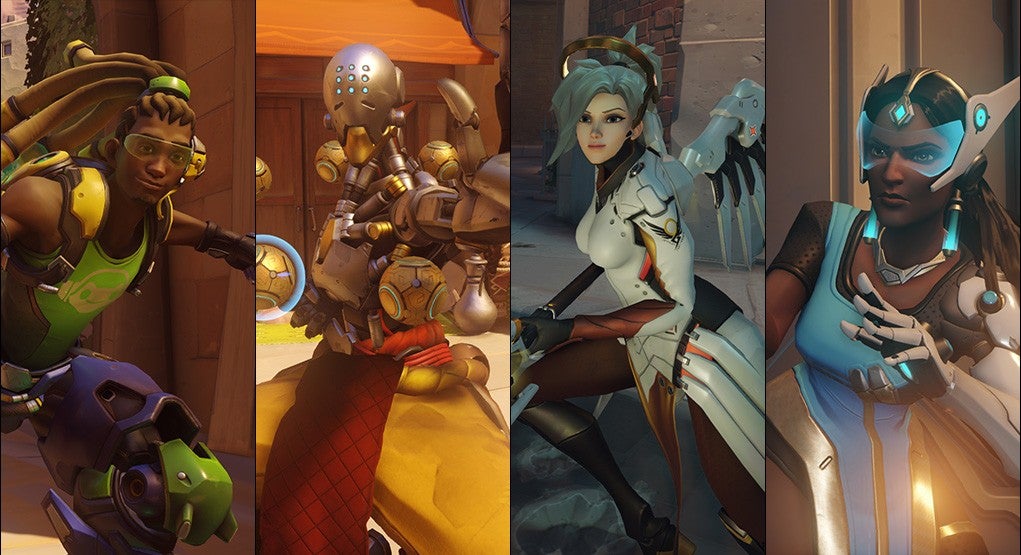
Now, on the other hand, I'll compare an Overwatch character, Tracer:


Tracer shoots using pulse pistols that deal heavy damage with a low clip count. Hitting shift lets her blink forward a small amount, and she may have 3 charges of blink at once. She can teleport back to where she was 8 seconds ago by hitting E, and her ultimate has her throw out a small yet deadly stick bomb.

I mean, you can see the difference there purely by the length of time needed to explain both characters. Garen took 4 paragraphs, Tracer took only 1. Overwatch has no exact stats, just simple, uncomplicated moves. The only slightly complex thing is health, and even that is rather simple. 3 kinds of health, normal health isn't special, shields will recharge, armour reduces incoming damage. You can explain how the game works really easily as well.

In an average MOBA, each team tries to destroy the other team's base. But to do that, they have to take down towers, jungle monsters, win various distinct phases of the game, and so on. In Overwatch, the goals are more clear. You attack/defend a control point, push/stop a payload, or try to win a king of the hill mode.

Again, this isn't calling Overwatch better, this is moreso calling it better for spectators. Overwatch is clear, friendly, simple, easy to explain, unobtuse, direct, and most importantly, there isn't crazy jargon being thrown around. Try to use “gank”, “CDR”, or “ADC” around non-MOBA players and they won't know what the hell you mean. Overwatch uses terms like “Capture”, “flank”, and “tank”, much more universal terms.

In many ways, esports have a severe language barrier of sorts separating them from those not familiar with them. Overwatch may be the perfect tool to bust through that. At the very least, it's worth a shot. I'd hate for esports to forever be this alien thing that not everyone can enjoy.  

Sunday, 31 July 2016

Smite, Mythology, and Now


Do I play too much Smite? I probably do. Hi-Rez's mythological MOBA eats up a surprising amount of my free time alongside Overwatch. I could talk about the balancing, the community, the camera, so much, but today I wanna go after a different topic. I want to talk about the core the game is founded on: the mythology.


It's what pulled me into the game in the first place, as I am a huge mythology nerd. I don't obsessively look over it or study it, but place a story about the Norse or Japanese pantheon in front of me and I will voraciously devour it. The way the different characters have been portrayed across cultures, however, is what really, really catches my eye. And if you head over to any community site, the original lore and how the deities are portrayed is a topic of constant discussion.

For my money, it's a fascinating process to watch, and how each god gets portrayed in game is always a fun treat every time a new one is added. That said, I want to take a closer look at how the stories of old get dragged into the modern era. I like to split this into 3 categories: the myths, the modern era, and the game.

The Myths

AKA the source. The original stories. Whatever you call them, they're what this entire game is based off of, and as such play the largest role in how a god is chosen and designed. I'll use Amaterasu as an example, as her myths provide an extremely clear inspiration for how she plays. Her passive illuminates enemies, as she is the goddess of the sun. Her abilities involve her sword, as a dash and powerful ult, and her mirror, as a ranged attack. These are based off of the 3 sacred treasures she had in the myths. So as you can see, pretty clear basis for her kit in game.

As well, the myths influence how gods are classified as well. Loki, as another example, is a trickster and loves playing pranks and causing mayhem. Fittingly, he is classified as an assassin, a class known for mobility and damage, not defence.

I'd also point out that mythology could very well influence what gods get added, but that really doesn't seem to be the case with Hi-Rez. They have multiple gods of the sun and gods of thunder, each of which are very unique. They even made a god out of Ah Muzen Cab, a god so little is known about, all that comes up if you google it right now is “He was a god of bees... probably”.

But, inevitably, the gods of old come clashing up against the modern era, and that's where this gets really interesting.

The Now

Now this is where this gets really, really interesting. The stories from potentially thousands of years ago are of course not going to totally work now, and many interesting changes had to be made. As what is my absolute favourite example of this, take Xing Tian. He is a deity who represents a spirit that never surrenders, even after his head was cut off. This is how he was portrayed:


Yeah, no way in hell that would work nowadays. It's too basic and unappealing to our modern eyes. So they updated him like so:


They kept the base there (headless with a face on his chest and an axe) and made it a lot more appealing to our designs nowadays. It's a great and simple way to show how updating gods helps them fit in.

As well as that, sometimes gods simply have to be changed because a part of their original lore would not be allowed now. Many gods (Aphrodite, Terra, ect.) were usually portrayed as completely nude, something of course not allowed in society now. And sometimes they have to change gods to fit the art style. 2 examples I like are are Ymir and Ravana. Ymir was just a really big dude, not really fitting with Smite's cartoonish and unreal style. And Ravana had 10 heads and arms, something likely impossible to style right, so they themed him around it.

And then there's China.

Ok, so for those who have no idea what I mean, Smite was also released in China. And their culture is... different, to say the least. What this did was force the devs to redesign a god or 2 to be less accurate in order to be acceptable in the Chinese market.

Take Hades and Kali as prime examples. Both used to feature heavy use of bones and skulls. Hades was a bit questionable, but Kali's design was basically 100% accurate to her depictions in Hindu culture. However, bones and skulls are a big, BIG no-no in Chinese culture, and in order to make sure the game would be acceptable there, they had to make some changes to their design. So they removed the bone themes and just made them more acceptable to the new market.

Before....

...And after.

What I find fascinating is how Hi-Rez try to be lore accurate up until they really can't much of the time. The god can be accurate as long as it's appealing now, possible in today's culture, would fit with the game's artstyle, would be appropriate for all markets, ect. There are a lot of caveats that have to be made, as you can see.

The Game

And the most important caveat often made is the actual game. They're making a MOBA, after all, one of the most complex genres out there. And lore accuracy is fantastic until it makes the game worse.

Again, some designs will have to be changed because of limitations in technology. Again, Ravana with 10 arms and legs likely would be a nightmare to program, and Vamana could not grow to the sizes he does in the stories because he'd be bigger than the arena. Often the best way they get around stuff like this is themeing moves around them. Using Ravana and Vamana again, Ravana can gain a shield of 9 heads around him, and Vamana can grow larger than any god, but not to astronomical proportions.

They also have to pick and choose what gods can actually be added to the game, or more accurately, what a new god would add to the game. You can totally have multiple thunder gods, but you've gotta make sure they're unique. Raijin is a good addition because his drum themeing sets him apart from Zeus and Thor quite well. And the more interesting, the better. Jing Wei is themed around flight, so they gave her a passive that lets her fly and a mobility based kit to go with it. It's really unique and fun.

And beyond all that, changing gods to be more fun is often a good choice. Sure, the Kraken was never in any Greek myths and Poseidon having it as an ultimate is horribly lore inaccurate, but shouting “RELEASE THE KRAKEN” is such a fun move to pull off.

Yes, I know this is a wildly out of date screenshot.


So that's a small look at what one game has to take into account when adapting source material. If you list it all out it's quite daunting. They have to look at the original, when it was made, the reasons behind it, modern standards, modern art/style, how they need to adapt it, the tone/style of the new work, how it will fit in, what needs to be changed to fit, if the work even needs it, and so on and so forth. I used Smite as an example because I play it a lot, but this really applies to any adaptation of anything. If you've got any games that adapt other source material you like, go at it in the comments! I'd love to see more examples of this. And as always, thank you for reading. Have a lovely day.

Wanna shout at me about how horribly wrong this article is somehow? Shout all you like on Discord!
https://discord.gg/0rv3prjQQUs7XwO9

Monday, 25 July 2016

Congrats, Blizzard. You played yourself.

Play of the game is bad for Overwatch.


Which sucks. It's a fun feature I'm surprised hasn't been thought of before, and it's a brilliant idea. In a void where player emotions and goals are all perfectly aligned. See, what I think Blizzard hasn't realized is that POTG does not exist in a vaccum. If players were robots only concerned with victory, it'd work perfectly. That's not how we think, alas, and it's created a system that actively hampers the overall skill level of the game and makes everyone play worse.

It weakens certain characters

Look, POTG is so inherently biased towards characters who deal damage it's not even funny. The supports and anyone else who doesn't have a high damage ult are very, very unlikely to obtain a POTG compared to the rate a Reaper or D.Va will get them. And because POTG is a fun and enjoyable thing to get, people will naturally want to, well, get them. So it pushes them towards offensive characters and making supports an even rarer sight. It's not exactly grade A design when a mechanic limits team comp in a game revolving around diverse team comp.
These poor, poor souls.

It's a bastion of individuality

Overwatch is a team game. Every single part of it hammers it into you how you need to work together, counter the enemy, and achieve dominance as a team.

POTG ignores all that and gleefully hoists one player above all. OK, OK, that's not really what it's meant for. It's meant to encourage congrats and highlight great play, something I'm all for. However, it's been twisted into showing how awesome one person is, and that fosters competition where there needs to be none. Anything that could potentially create something like this isn't good. And it's not potential. I've seen people rage in chat about how they didn't get POTG and seen people gloat rather unsportsmanlike about it. It's not creating those congratulations, that's for sure.

Group? What group?

POTG focuses on one player. That's fine. I bet you anything Blizzard struggled like hell to even implement it, and the fact that it's even in the game impresses me. It would likely be nigh impossible to get it off that one person because of technological limits.

But that's not good enough, and I feel that POTG right now simply can't tell the full story. Take Zarya. Poor, poor Zarya. Her ult sucks all enemies into a single point. This is an excellent moment for allies to unleash their firepower/their own ults. I think we can all agree that plays like that were made possible in 2 parts, a supporting start and an offensive move. It's only the character who goes on the offensive that gets the POTG, however, and completely ignores the set up. It's just too individual, again, and ignores the group.

Gameplay is King

You could ignore all my other points. I could literally write this with only this point and I'd still consider POTG a big issue that just needs fixing.

POTG makes everyone play worse. POTG makes people work together less. POTG hinders the overall skill growth of Overwatch as a whole.

I'll keep it quick and simple. What POTG does is, well, make you want to earn it. Everyone wants their skills shown to all in the match. It's fun. But the fact that it's a prestigious achievement makes it a goal for many, and will affect how they play. Sure, using your ult as Reaper to take out just the enemy healer, breaking their line and forcing the team back as a whole is a valuable contribution to the game. But it will not ever earn you a POTG. So, y'know. Why do that, when you could save it to kill 4 enemies at once at a point when it wouldn't matter? You'd get POTG! It'd be all good!

Look, you may say it doesn't affect you. But I know the pull, and I know how tempting it is. I myself am guilty of saving ults because subconsciously, I know it wouldn't nab POTG. I see players not popping ults when they should because of POTG. And it's not just ults. POTG runs off kills most of the time, which encourages people to run after enemies, abandon teams, and not being careful to defend the point. When a mechanic limits team comp, when a mechanic limits cooperation, when a mechanic makes people play worse,

Is that really worth keeping?

Well, uh, yes

Ok, I've talked a lot of shit about POTG. But I really, really want this system to work sooo badly. It creates and fuels water cooler moments, and is likely a large catalyst of why Overwatch is everywhere on the internet right now. So fixing it is definitely the better option. How?

1. Credit more than 1 person

This would immensely help team playing and a mindset. The video below is a great mockup, but it may not be feasable. Perhaps they could implement an “assist” function where say, if a Zarya set up a POTG or a Mercy was damage boosting the player their portrait and username could be off to the side.


2. Lessen the impact of ults

Look, ults are cool, fun, and powerful. And yet they don't quite fit POTG that well. There's a reason the phrase “Q of the game” is used rather derisively. Ults are too low effort to get POTG's with, and I think the best way is to simply lessen how heavily the game weighs ultimate kills compared to ordinary kills.

3. Help the supports

Supports struggle to get POTG, and as a result that pushes players away from them. I'm not entirely sure how to fix this, but it may have to be integrated into the “assist” feature I proposed earlier. They could also just add some mechanics to help them. For example, when Lucio ults, if an enemy would deal mortal damage if not for the shield, it could count as an “ally saved”. That'd help Lucio get POTG more often.


So, yeah. POTG is something I feel could be so much more, because it's a great feature. In theory. And I want that caveat gone.


Want to discuss this article with me and others? Then this Discord server's for you.
https://discord.gg/0rv3prjQQUswAA6A

Thursday, 21 July 2016

Did You Really Beat Zero Escape?

MASSIVE ZERO ESCAPE SPOILERS AHEAD


How many video games have you beaten? Quite a few, if you're an avid gamer. Of course, not every game is beatable, multiplayer games have no endstate and games like The Sims just keep going. But for the most part, games are there to be beat. Defeated. Conquered by you, the player.

But what if you didn't? What if, despite reaching the endstate, you didn't really “beat” the game? And I'm not talking story failures, where you fail in the story at the end of the game but you beat all the levels. No. I mean you achieved the best ending, did everything right... but in no way are you really able to celebrate your achievement.

This is where Zero Escape comes in. With the release of the latest game, Zero Time Dilemma, it really reminded me just how damn good the writing and plot of the series is. Not only that, it wove the gameplay and story together that even after I beat it, I felt no true satisfaction because of what my victory meant.


But first, let's cover our bases. For those of you who don't remember the plot that well (You HAVE played it, right?) what I'm talking about here is specifically the timeline hopping, given the name of SHIFTing in Zero Time Dilemma. Jumping between timelines is integral to the story and gameplay. It's a nice way to go about the multiple paths in games and how it usually doesn't make much sense. But what's really interesting here is pertinent info revealed in ZTD.

SHIFTing is not just a simple jump. It's more consciousness swapping. The “you” from the other timeline is yanked into your own, while you go to the other timeline. Oh, and you can only SHIFT when you're about to die. Moral dilemma, anyone?

But seriously, I want to point out just how gosh dang amazing this is as a plot point. The usual game element of alt endings is given a horrifying tinge to it that will make you regret what you've done. This is where the entire point of this article comes back in.

In order to “beat” the game, you have to fail an immeasurable amount of times in other timelines. You have to actively murder other versions of yourself to save the world in a single timeline. You achieve victory in a single, solitary timeline, dwarfed by the millions of others filled with tragedy and sadness.


Think about how this clashes with other games. In most games, death is framed as the player failing to accurately portray the story. Mario didn't really fall down that pit, you screwed up. The story didn't end there, you just told it wrong. Death is not a serious concept in these games, because any and all failures on your part are simply swept aside as not having truly happened.

Zero Escape does the exact opposite. Every single failure you had is completely and utterly valid. Every death, mistake, and tragedy will exist. Forever. Everything you do is in a sense, permanent due to the timelines. Just because you find your way to the best timeline doesn't mean the others cease to exist.

So, think about this. If you fail dozens of times, deaths abound, and none of it can be erased, did you really win? Did you achieve victory, or simply stumble upon the best timeline? If there are dozens of still completely valid failstates alongside one valid winstate,


Would you still say you “beat” the game?